This article explores data quality trends and what they reveal about the development of data quality management practices.
As the sixth and final article in the series, Data Management Maturity in Motion: Trends and Strategic Signals from 2019 to 2025, we examine how the data quality capability and its core components have evolved.
The analysis draws on the annual results of the Data Management Maturity Scan, which is based on the O.R.A.N.G.E. Data Management Framework. I have been publishing these results on the Data Crossroads site since 2019.
In this article, I will:
- Compare how leading data management industry guidelines define data quality and its related capabilities.
- Analyze development trends in data quality maturity and its core components from 2019 to 2025.
- Share practical insights and recommendations for strengthening data quality management and delivering business value.
Governance for Data Quality Capability
Data quality has been a priority for organizations for many years. Yet I am still surprised by how difficult it remains to demonstrate successful results.
The 2024 Wavestone survey found that only 37% of data executives considered their organizations’ data quality improvement efforts successful. Earlier TDWI research presented a somewhat more positive picture. However, only half of respondents reported substantial success in DQ initiatives.
These findings raise an important question for me. Organizations invest in data quality tools, processes, and remediation activities, but how often do these investments produce the business results they were intended to deliver?
This is why I consider it essential to distinguish between establishing the data quality capability (organizational context), improving data quality, and demonstrating the business value of those improvements.
Definition Challenges
Let’s briefly check how leading DM frameworks define the Data Quality capability.
DAMA-DMBOK2
DAMA-DMBOK 2 defines data quality as the “planning, implementation, and control of activities that apply quality management techniques to data, in order to ensure it is fit for consumption and meets the needs of data consumers.”
What does it really mean for data to be “fit for purpose”? And who decides what that purpose is? I already addressed one challenge I see in this definition in my book, Data Management Toolkit 2.0. Let me briefly repeat it in this article.
Traditionally, data owners define the intended use of data. But can we anticipate every possible use? This dilemma has become particularly relevant in the age of Big Data and AI. Data collected for one purpose can create unexpected value in entirely different contexts. In my view, limiting data quality to its originally intended purpose may also limit innovation. The challenge is balancing ensuring data is suitable for its intended use with recognizing its potential for new applications. I am curious: what is YOUR opinion on the subject?
DCAM
The EDM Council glossary defines data quality in two contexts. In the organizational context, data quality is the function that ensures that data being used for operating processes is fit-for-purpose. This definition is also interesting as it limits data to operating processes, but what are they? And again, we face the fit-for-purpose condition.
The ORANGE Data Management Framework
The O.R.A.N.G.E. Data Management Framework, which I’ve been developing for more than ten years, defines data quality as a business capability to deliver data and information of the required quality. It means that the user (AI, human being, or IT system) should have particular requirements that the DQ capability must ensure.
I am convinced that, even in a business context, you may find multiple other definitions. In any case, your organization should have one aligned definition.
Implementation Challenges
I checked several sources to gather info on implementation challenges. For example, Gartner argues that many data quality programs concentrate on fixing technical problems without sufficiently connecting those improvements to business outcomes. It also highlights technology-first investment, unclear decision rights, and inadequate business accountability.
Another reason for disappointing results is something I have often encountered in practice: organizations treat data quality as a stand-alone data management capability. They introduce tools, measure errors, and start remediation activities without considering how strongly data quality depends on other capabilities.
For example, data governance establishes accountability and decision rights. Data modeling provides business definitions, data requirements, and models. Metadata management delivers information about data assets, while data lineage explains data movements and transformations. Data and application architecture define structures and interfaces, and master and reference data management helps establish consistency across systems.
Without these foundations, data quality teams may identify and correct errors but struggle to eliminate their root causes. The same problems keep returning.
I have written about these dependencies before, and my conclusion remains the same: successful data quality management requires coordinated outputs from multiple data management capabilities, not simply a well-functioning data quality team.
Challenges with Delivering Business Value
We often discuss the business value of data quality as if the business were a single stakeholder with shared needs. In reality, organizations have different stakeholder groups, and expected benefits vary across managerial and organizational levels. The enterprise-wide poll results in Figure 1 illustrate this distinction.
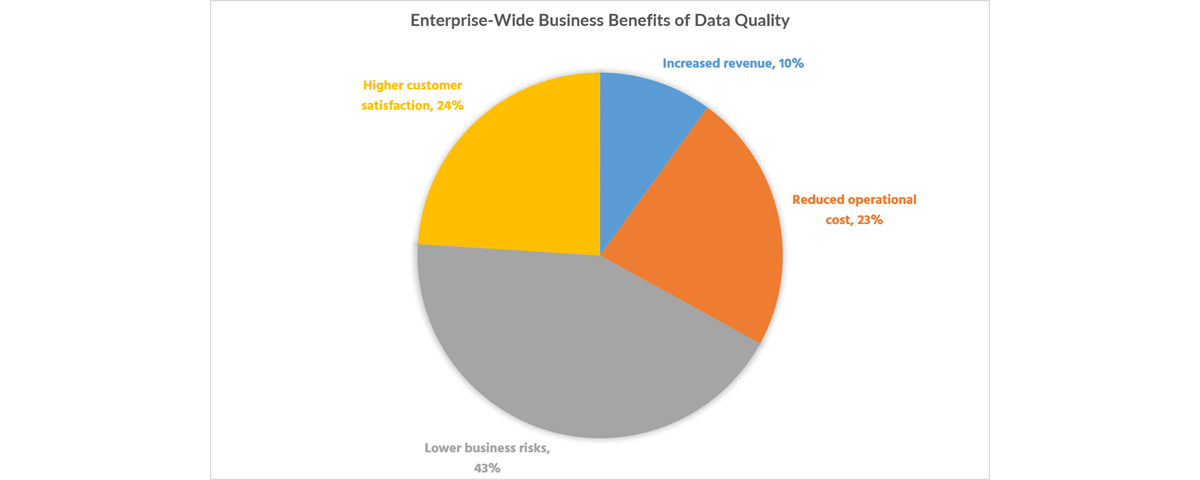
Figure 1: Enterprise-wide business benefits of data quality.
Reducing business risks is clearly the leading priority, while customer satisfaction and operational cost reduction follow closely. Revenue growth receives much less attention. I find this understandable: at the enterprise level, data quality is often valued for protecting business performance and reducing uncertainty rather than generating immediate additional revenue.
The perspective changes when we consider middle managers and operational teams, as shown in Figure 2.
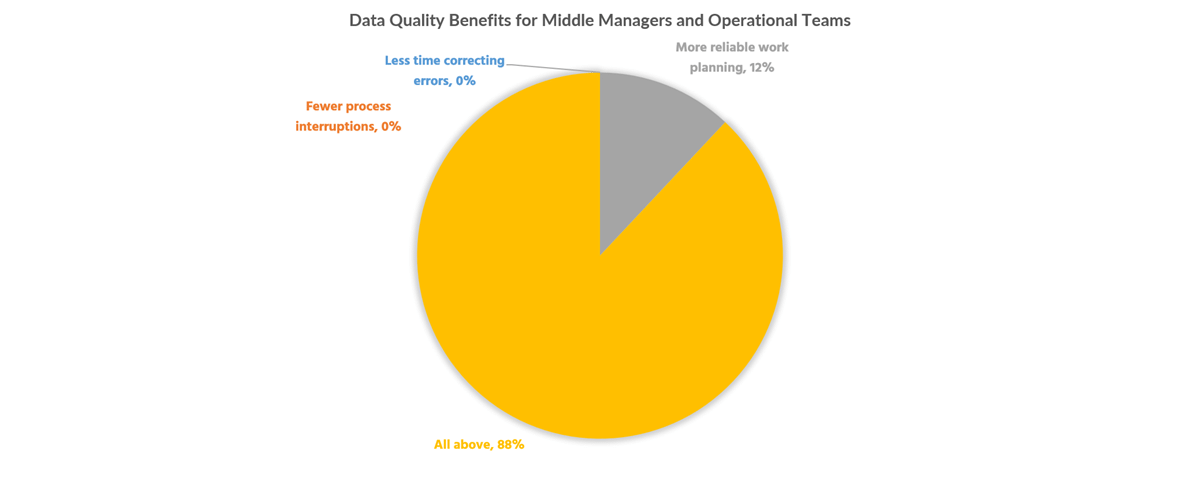
Figure 2: Data quality benefits for business middle managers and operational teams.
The overwhelming preference for “All of the above” suggests that practitioners recognize the combined benefits of more reliable planning, fewer process interruptions, and less time spent correcting errors. Unlike enterprise-level benefits, these improvements directly affect everyday activities and team performance. What I find particularly important is that data quality cannot be measured through one universal set of business outcomes. Meaningful assessment requires identifying which stakeholder groups benefit, what results they expect, and how those results can be measured at their organizational level.
Maturity Measurement Challenges
Ideally, I would measure data quality maturity through the business outcomes discussed above, considering the different needs of stakeholder groups and organizational levels.
However, these outcomes also depend on data governance, modeling, metadata, architecture, and other capabilities. This makes it difficult to isolate the contribution of data quality management.
For this historical review, I therefore rely mainly on output-based maturity indicators. They provide measurable evidence that can be compared across organizations and years.
The following trends reflect progress in establishing and operating data quality management, rather than directly demonstrating its business value.
Development Trends in Data Quality
General Trends
The development of data quality maturity from 2019 to 2025 tells a rather mixed story. Organizations have made progress in bringing data quality under control, but this has not translated into consistent improvements in overall maturity. What concerns me most is that many organizations still seem focused on establishing or improving their data quality practices rather than making them consistently effective. The recent developments in Figure 3 reinforce this impression.
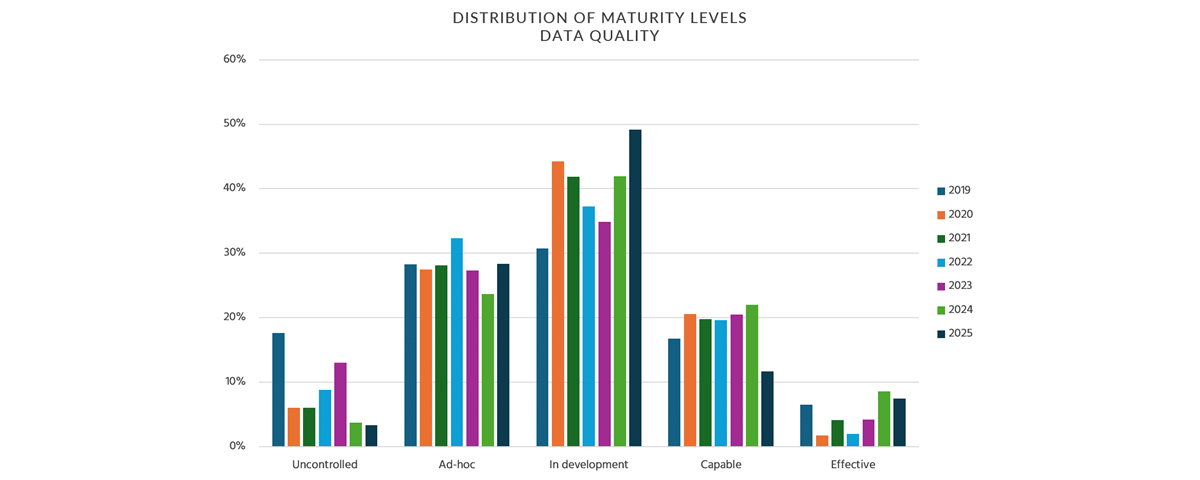
Figure 3: Trends in developing the data quality capability: 2019-2025.
Despite years of investment and growing awareness, achieving sustainable data quality management remains a challenge. For me, these trends also help explain why so many data quality initiatives struggle to demonstrate lasting success.
Trends in Core Data Lineage Outputs/Indicators
The overall maturity trend shows how data quality management has developed, but it does not reveal which aspects of the capability are improving or how these improvements affect business operations.
For this analysis, I use four indicators from the Data Crossroads Maturity Scan: information for decision-making, on-time delivery of data and information, data meeting required quality levels, and data quality processes and roles.
These indicators combine outcome-oriented and output-based measures. The first three reflect the results that data users and business stakeholders expect. The fourth focuses on the processes and responsibilities required to deliver and sustain these results.
Together, they help assess not only how data quality management is being established, but also how effectively it supports business needs.
Information for decision-making
Providing information that supports reliable business decisions remains a persistent challenge. The maturity trends in Figure 4 show relatively little change between 2020 and 2025. Despite some fluctuations, organizations have made limited progress in establishing this capability as a consistent operational practice.
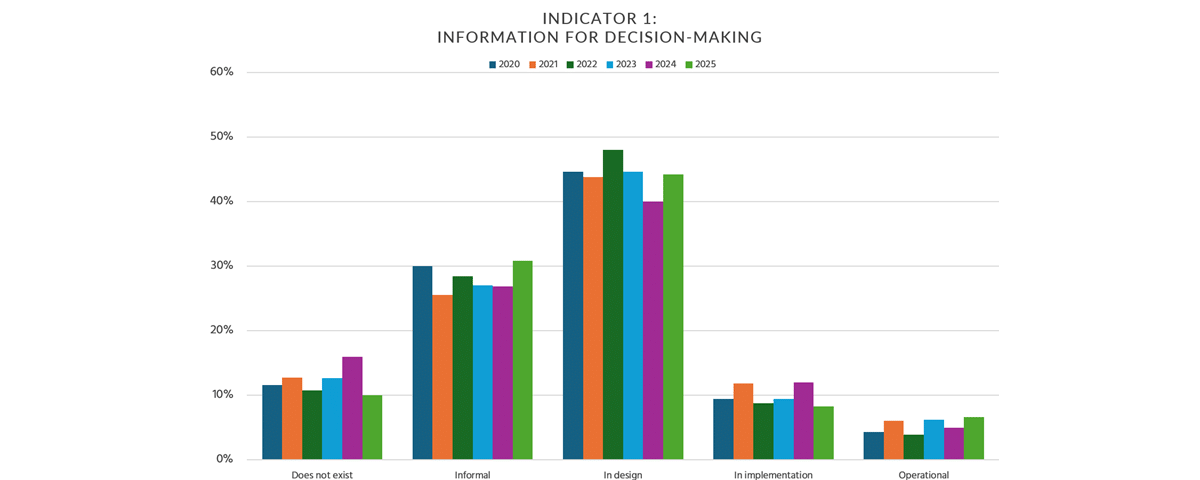
Figure 4: Trends in delivering data for decision-making.
What concerns me is that supporting decision-making is a fundamental purpose of data quality management. The results suggest that organizations are investing in developing this capability, but many still struggle to ensure that decision-makers consistently receive information that meets their needs.
On-time delivery of data and information
Timely delivery of data and information shows modest improvement over the period, although progress remains uneven. As shown in Figure 5, more organizations are moving toward implementation and regular operational use, but a considerable share still struggles to establish reliable delivery practices.
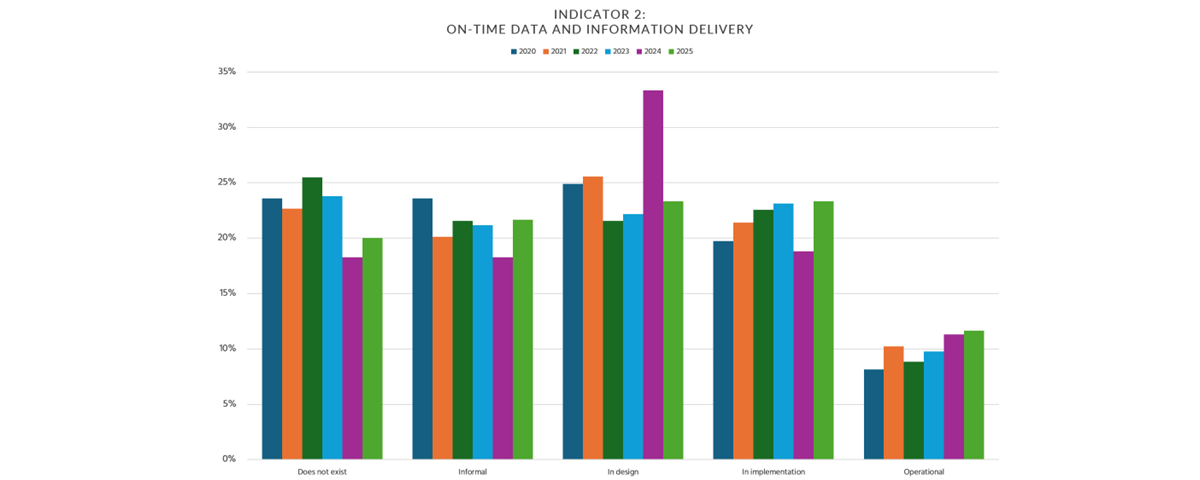
Figure 5: Trends in on-time data and information delivery.
What concerns me is that even accurate data can lose its business value when it arrives too late. Delays can disrupt operations, delay decisions, and affect business performance. Trends suggest organizations are gradually addressing this issue, but timely information delivery remains far from consistent.
Data meeting required quality level
Ensuring that data meets the required quality levels remains a significant challenge. The development trends in Figure 6 reveal uneven progress. Although operational practices are becoming more established, many organizations still struggle to deliver consistent results.
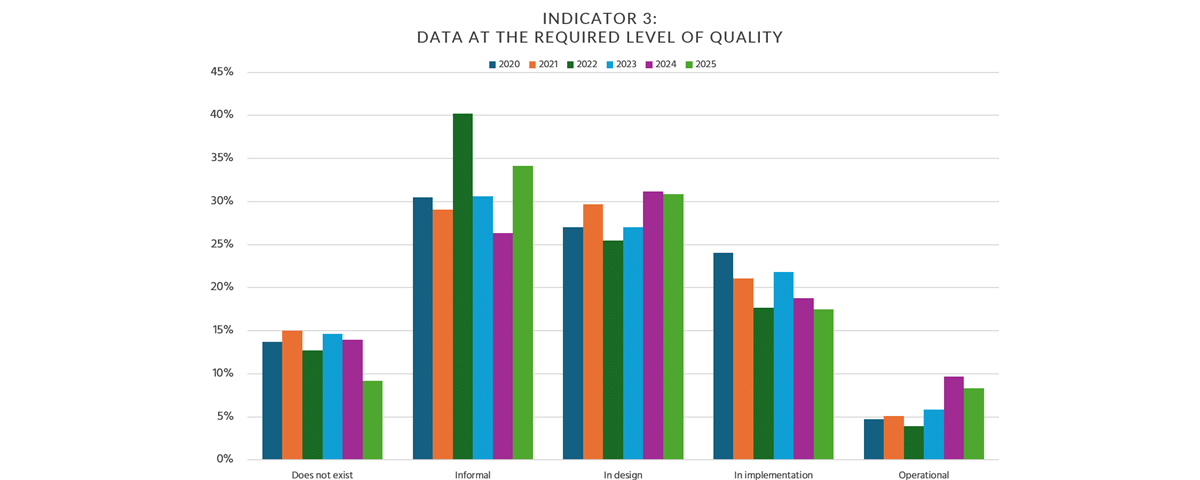
Figure 6: Trends in data meeting the required quality levels.
For me, this raises an important question: who defines the required quality level, and how do organizations verify that it has been achieved? Measuring data quality is only the starting point. The real challenge is ensuring that data consistently meets the requirements of the business processes and decisions it supports.
Data quality processes and roles
The development of data quality processes and roles raises another concern. As shown in Figure 7, organizations are increasingly formalizing this part of data quality management, but progress toward consistent operational practice remains limited.
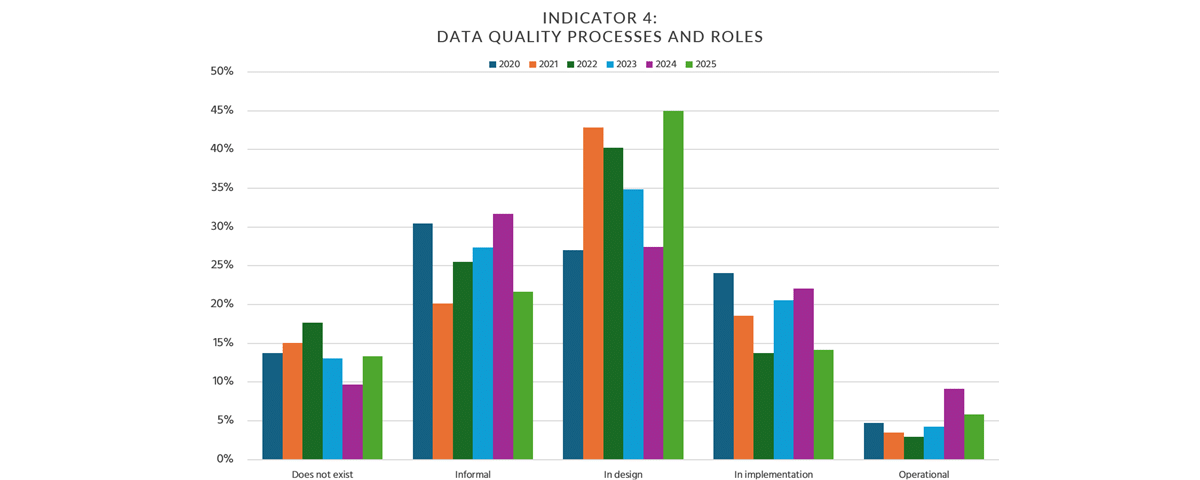
Figure 7: Trends in establishing QA processes and roles.
In my experience, this is a familiar problem. Organizations define responsibilities, appoint data owners and stewards, and document procedures. Yet these arrangements do not always translate into effective issue resolution and continuous improvement.
The trend suggests that designing data quality processes and assigning roles is becoming more common, but making them work in daily operations remains a significant challenge.
Summary
Looking at the data quality trends from 2019 to 2025, the industry research, and the LinkedIn poll results together, I see a rather contradictory picture.
Data quality is widely recognized as essential, yet organizations still struggle to make it work consistently. The maturity results confirm this. Although organizations have moved away from completely uncontrolled practices, many remain focused on developing their data quality capabilities rather than operating them effectively.
The four indicators add another important insight. Progress in delivering reliable information for decisions, ensuring timely delivery, and meeting required quality levels remains uneven. Meanwhile, organizations continue formalizing data quality processes and roles without always translating them into sustainable operational practices.
The findings from Wavestone and TDWI reinforce this concern. Despite considerable investments, successful data quality management remains difficult to achieve.
Another conclusion concerns business value. The poll results demonstrate that different stakeholder groups expect different benefits. Enterprise-level priorities focus primarily on reducing business risks, while middle managers and operational teams recognize several interconnected improvements in their daily work.
Finally, I believe that treating data quality as an isolated capability remains one of the fundamental implementation problems. Data quality depends on the deliverables and activities of several other data management capabilities. Without their coordination, organizations may continue correcting data errors without eliminating the underlying causes.
Overall, the challenge is not simply improving data quality metrics. It is establishing a sustainable capability that delivers data fit for its intended use and creates measurable value for different business stakeholders.
Recommendations
The findings suggest several priorities for organizations seeking to strengthen data quality management.
Connect data quality with business needs.
Data quality requirements should reflect how different stakeholder groups use data. I would start by identifying the business processes, decisions, and risks that depend on data quality. This provides a clearer basis for defining what fit for purpose means and how the required quality levels should be measured.
Consider dependencies with other data management capabilities.
Data quality cannot develop independently from governance, data modeling, metadata management, data lineage, and architecture. Organizations may benefit from identifying which outputs these capabilities must deliver to support data quality. This can help address the root causes of recurring problems rather than repeatedly correcting their consequences.
Turn data quality processes and roles into daily practice.
The maturity results show that formalization does not automatically lead to effective operation. Clear responsibilities are important, but their value depends on how people identify, investigate, resolve, and prevent data quality issues. Greater attention to these activities may help close the gap between designing and operating the capability.
Measure outcomes alongside data quality indicators.
Technical data quality metrics tell only part of the story. Organizations also need evidence that better data supports decisions, reduces risks, improves operational performance, or strengthens customer satisfaction. These outcomes should reflect the priorities of the stakeholder groups receiving the benefits.
Address data quality throughout the data lifecycle.
Many data quality problems originate in business processes, applications, and data transformations. Correcting them after they reach reports or analytical systems can become an endless exercise. A more sustainable approach connects data quality requirements with data creation, processing, integration, and use.
Keep data quality requirements aligned with changing business needs.
The concept of fit for purpose deserves regular reconsideration. New applications, analytics, and AI use cases may introduce requirements that were not anticipated when data was originally collected. Data quality management therefore needs sufficient flexibility to support innovation while maintaining appropriate quality standards.
Integrate maturity and performance assessment into a rolling strategy.
Maturity assessment helps establish how the capability is developing. Performance indicators show whether expected results are being achieved. I would combine these perspectives in a rolling strategy, such as the A.D.A.P.T. approach, to review progress, reconsider priorities, and direct improvement efforts toward measurable business value.