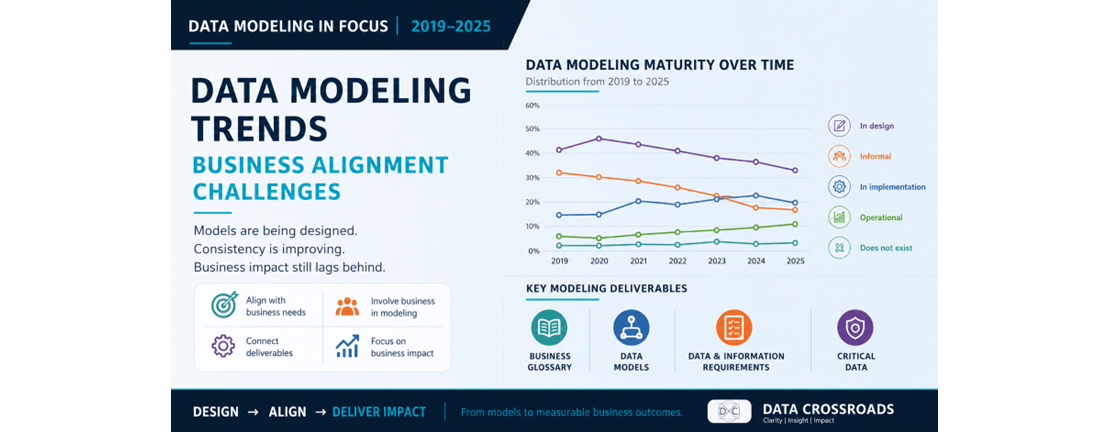
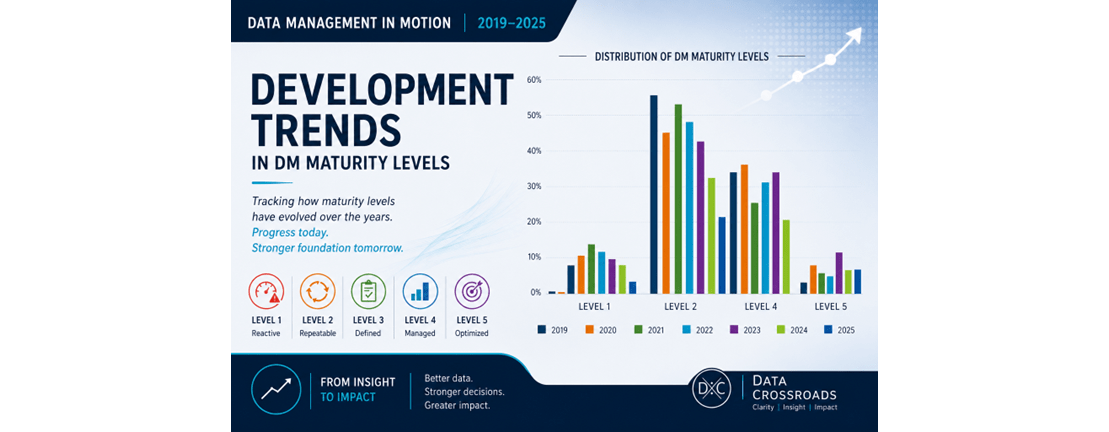
This article discusses evolving data governance development trends at the enterprise level.
This is the second article in the Data Management Maturity Trends 2025 series. In this article, I focus on the trends in the development of the enterprise-wide data governance capability and its core components.
The annual results of the Data Management Maturity Scan, which is a part of the O.R.A.N.G.E. Data Management Framework, form the basis for these trends. The scan results have been published on my site, www.datacrossroads.nl, since 2019.
This article will:
• Present the definition of the enterprise-wide data governance capability accepted by the O.R.A.N.G.E. Data Management Framework (DMF).
• Highlight six-year trends in the development of this capability and its components.
• Provide practical recommendations for further development of this capability.
Governance for Data Management
Let’s first discuss the challenges organizations worldwide face with establishing a data governance framework and function.
Semantic Challenges
I have widely addressed the challenges of defining the “data governance” capability in my books and publications.
For those interested in exploring different perspectives, I recommend reviewing The Data Management Toolkit 2.0, Aligning Data and AI Governance, and the article series Reshaping Data Governance , and Data Management & Data Governance 101.
Let me summarize the key points:
- There is no commonly accepted definition of data governance, its constituent components, or its expected deliverables.
- The terms “data management” and “data governance” are often used interchangeably. This contributes to confusion.
- The term “data governance” is frequently misunderstood. It does not govern data itself. Instead, it governs the management of data. Leading frameworks such as DAMA-DMBOK2 and DCAM® emphasize this point.
What does this mean for you and your colleagues?
It means that you, as a data management or governance lead, must take responsibility for defining your organization’s data governance definition and the scope and method of its implementation.
Design Challenges
Imagine you and your organization now face the challenge of designing the data governance capability.
In my opinion, it matters less which external guideline you use. Two other points matter more.
The first point is acceptance. The definition of data governance must be widely accepted and understood within your organization.
The second point is fitness. The design scope must match your organization’s current needs and resources. At the same time, it should provide a basis for future scaling and adaptation when circumstances change.
In my consulting practice, I apply the model developed in the O.R.A.N.G.E. Data Management Framework, shown in Figure 1.
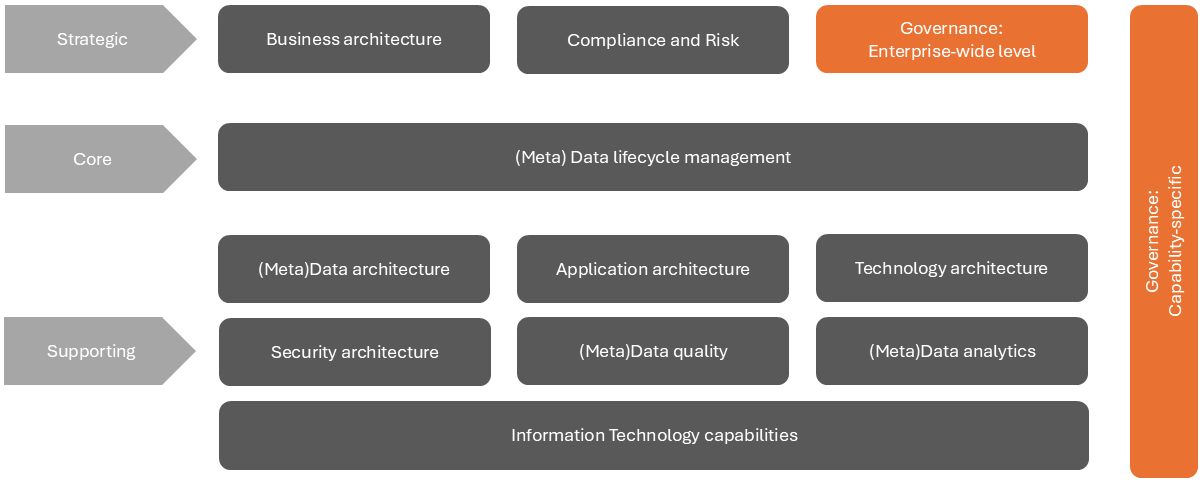
Figure 1: The Data Management Capability Map.
This model recognizes data governance as one of the data management capabilities. Its role is to supervise and direct data management to ensure that its goals are effectively met.
The data governance capability must be designed and implemented at two levels: the enterprise-wide level and the individual data management capability level.
In this article, we consider only trends related to the enterprise-wide data governance capability.
The purpose of this capability is to establish the data management practice or office that manages data as a strategic enterprise-wide business asset. In practice, this means supporting business value, enabling compliance, and aligning decisions across domains.
Maturity Measurement Challenges
When we want to assess whether the designed capability fulfills its role or meets current needs, we conduct a maturity assessment. Then the question arises: what should form the basis for this assessment?
Purpose alone does not show whether governance is working. This is where outcomes begin to matter. Outcomes make progress visible because they show whether governance functions in everyday operations.
For the enterprise-wide governance capability, we can consider several examples of outcomes.
The first outcome appears as consistent control across the data lifecycle. Data is managed from creation to deletion with continuity and oversight.
Another outcome becomes visible through clear accountability. Ownership and stewardship are defined, which reduces ambiguity and delays.
A third outcome is evident in decision-making. Managers begin to rely on consistent data instead of reconciling conflicting reports.
As these outcomes take shape, an important pattern starts to emerge. Each outcome depends on several elements or deliverables working together. So, the key decision in measuring capability maturity is this: are you going to measure it at the outcome level or at the output level?
The enterprise-wide data governance trends discussed later in this article present the results of an assessment of developments in the core outcomes of this capability.
Business Challenges
In recent years, I have delivered many workshops at international conferences on data and AI governance frameworks. One impression has become especially clear to me: organizations can often be divided into three groups based on the status of their data governance capability.
The first group includes organizations that have designed data governance but have not operationalized it. They have structures, roles, and principles on paper. Yet these elements do not work in everyday business practice.
The second group includes organizations that have already operationalized data governance. However, their current setup requires revision because the business environment has changed. New priorities, regulations, technologies, AI initiatives, or organizational changes can make the existing governance model less effective.
The third group includes organizations that have only started, or have not started, data governance implementation. What surprised me most is that some of these organizations have already established AI governance. I can hardly imagine how AI governance can succeed without a working data governance capability.
For me, the relationship is simple: data governance and data management form a mandatory foundation for AI governance. If this topic is relevant to you, I discuss it in more detail in my book, Aligning Data and AI Governance.
Implementation Challenges
I would like to demonstrate the implementation challenges using the results of a LinkedIn poll I posted in 2025 and repeated in 2026 (see Figure 2).
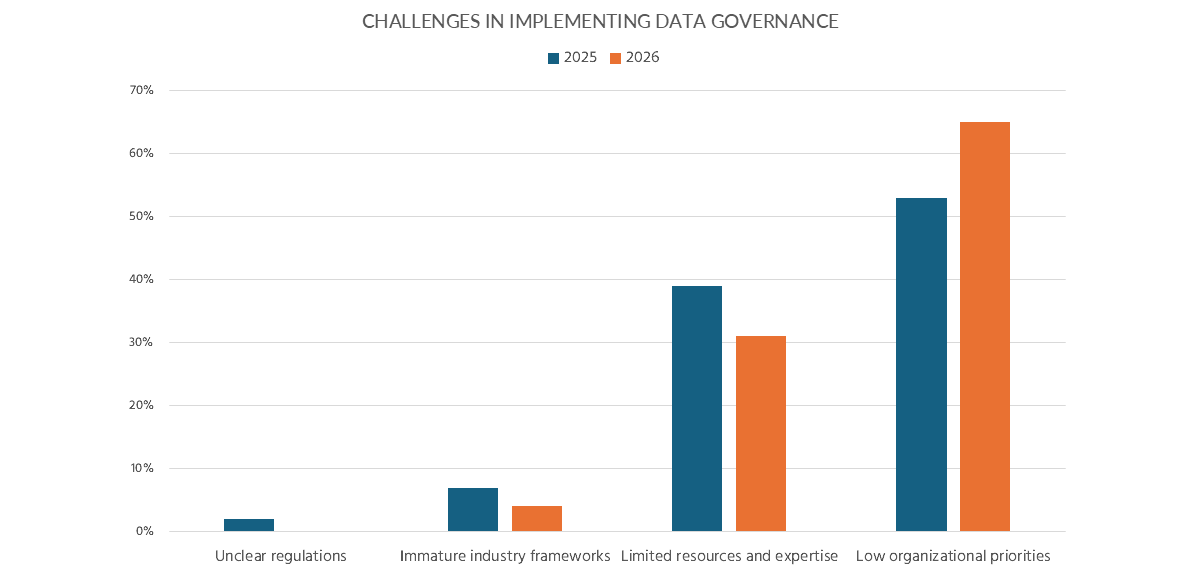
Figure 2: Trends in challenges with data governance implementation.
The results show a clear signal. The main challenge is not unclear regulations or immature industry frameworks. These factors appear, but they remain relatively minor compared with the other two.
The strongest challenge is low organizational priority. In 2026, this challenge became even more visible. This means that many organizations understand the need for data governance, but still struggle to give it enough attention, resources, and executive support.
Limited resources and expertise remain the second major barrier. This confirms a familiar pattern: data governance requires people who can design, coordinate, and operationalize the capability. Without this capacity, even a well-designed framework stays difficult to implement.
Trends in Enterprise-Wide Data Governance Development
General Trends
When I look at the six-year trend in enterprise-wide data governance, shown in Figure 3, I see a capability that is clearly advancing but still not fully embedded in many organizations.
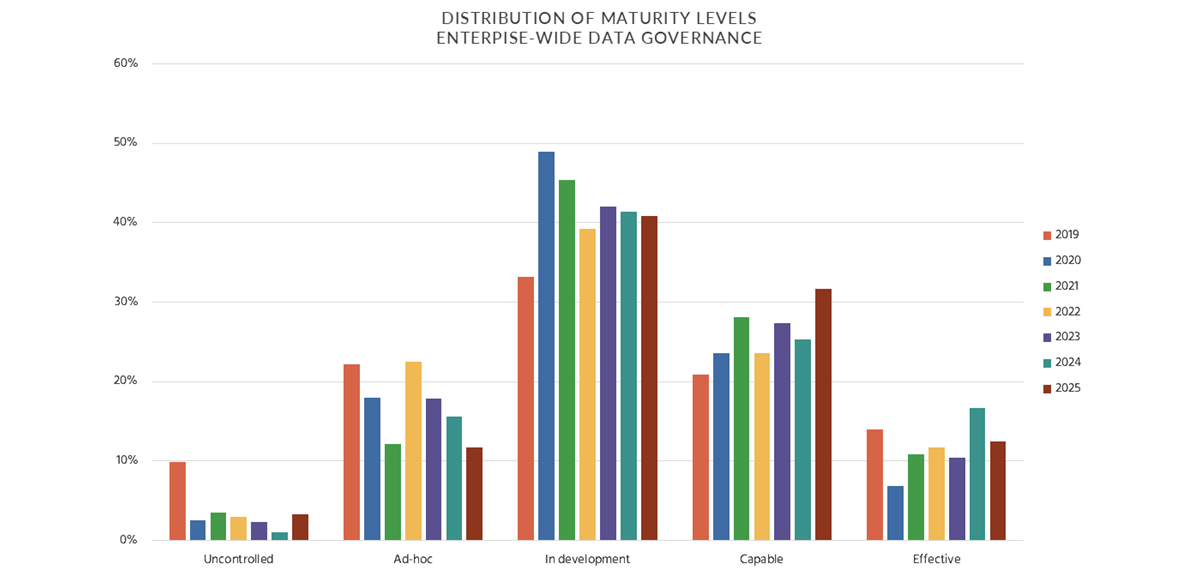
Figure 3: Trends in the enterprise-wide data governance.
The lowest maturity levels become less visible over time. For me, this is an important signal. It means that fewer organizations treat data governance as something purely ad hoc or uncontrolled. More organizations have started to give it a formal place in their data management agenda.
However, the dominant position still remains around the development stage. This tells a familiar story. Many organizations have understood the need for enterprise-wide governance. They may have started defining structures, decision-making bodies, policies, roles, and responsibilities. Yet the harder part is turning this design into daily practice.
The movement toward the higher levels is visible but gradual. Some organizations are clearly becoming more capable. Still, the broader picture shows that enterprise-wide data governance remains a capability in transition. It is being designed and implemented, but for many organizations it still needs stronger operational discipline.
Trends in Core Governance Indicators
The core indicators help explain why this transition takes time.
Data Management Function in Place
The first indicator looks at whether a data management function is in place, presented on Figure 4.
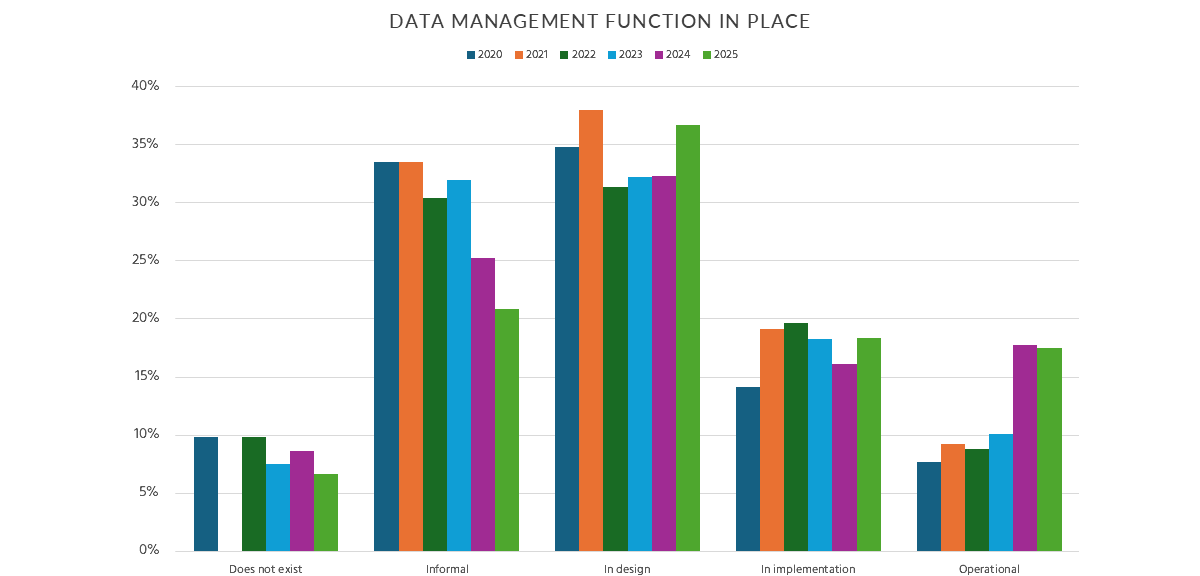
Figure 4: Trends in establishing a formal data management function.
I see this as one of the basic foundations of enterprise-wide governance. Without such a function, it is difficult to coordinate data management across domains, business units, and initiatives. The trend shows that many organizations are still designing or refining this function, while more mature organizations are moving toward implementation and operation.
Data Management Policies and Processes.
The second indicator focuses on data management policies and processes (see Figure 5).
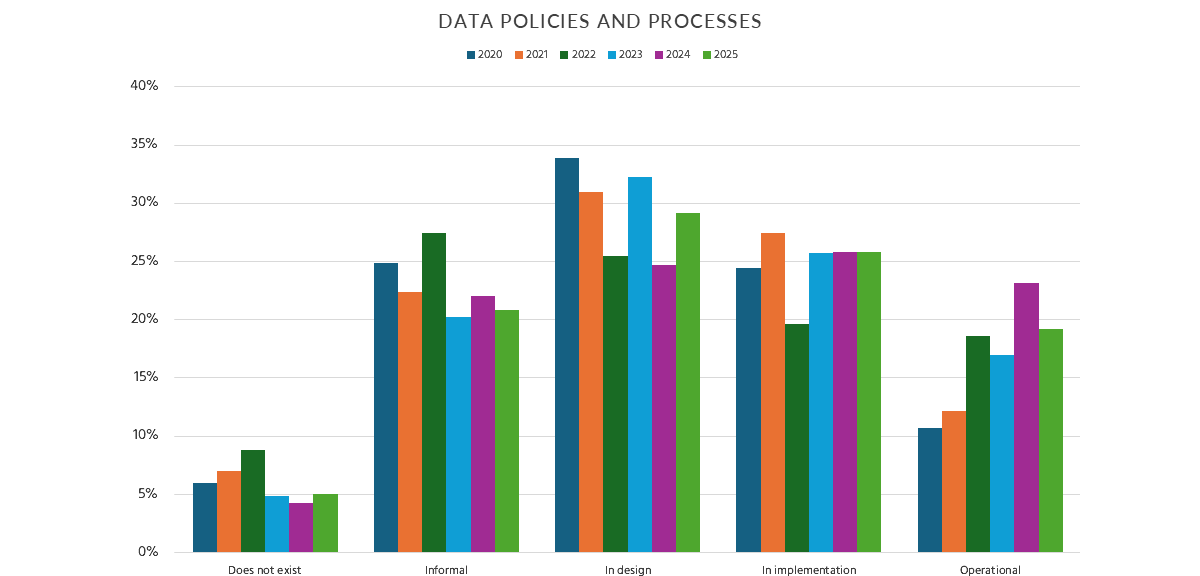
Figure 5: Trends in establishing formal data management policies and processes.
This is where governance starts becoming executable. A policy alone changes little. It must be translated into processes that people can follow, and managers can control. The trend suggests that organizations are moving in this direction, but many are still formalizing the basics.
DM Funding.
The third indicator concerns funding / budget. Figure 6 demonstrates the trends in DM availability.
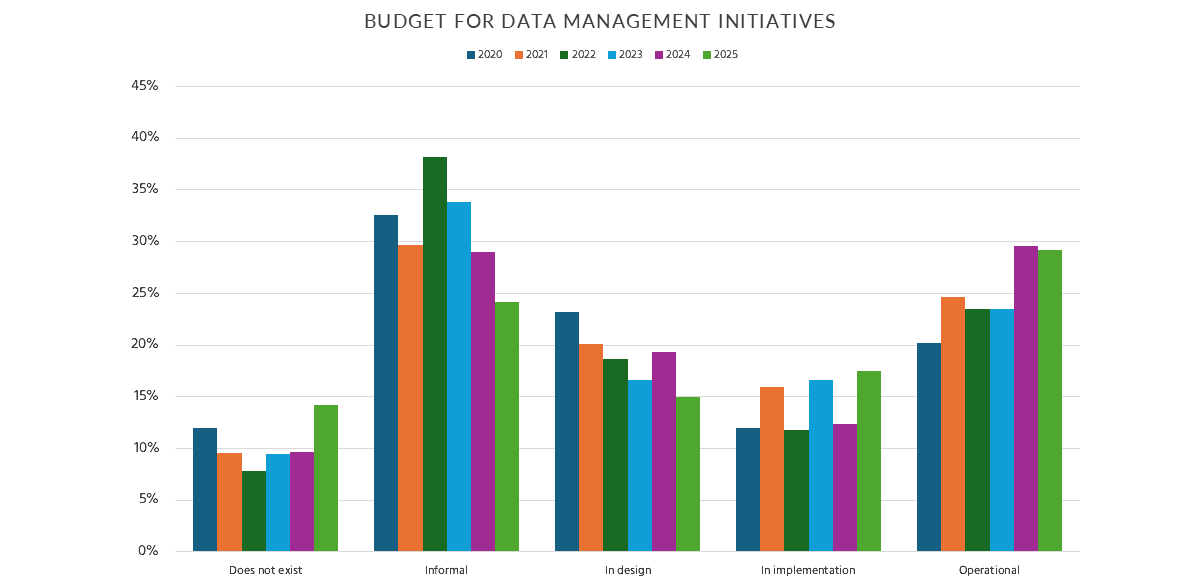
Figure 6: Trends in DM budget availability.
The necessity of proper funding is often underestimated. Data governance cannot become stable when it depends on occasional funding. The trend indicates that financial support is becoming more structured, a positive signal for long-term sustainability.
C-Suite Awareness
The fourth indicator looks at C-suite awareness and support. Figure 7 shows the trends.
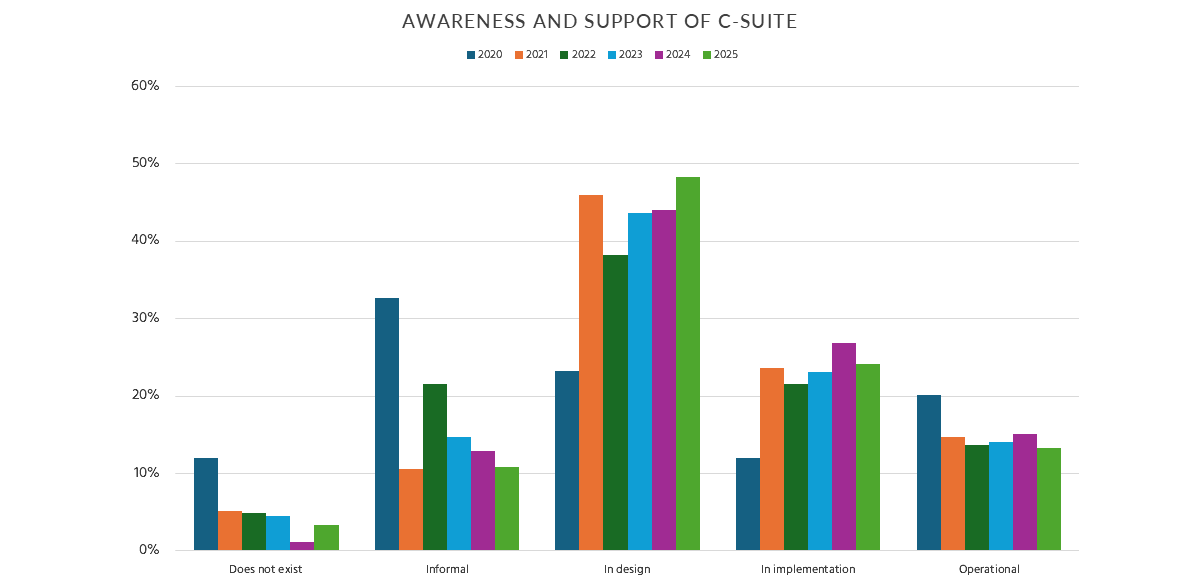
Figure 7: Trends in C-Suite support.
For me, this is one of the most decisive factors. Enterprise-wide governance requires authority, sponsorship, and visible commitment. The trend shows that executive support is becoming more structured, although full operational alignment is still developing.
Together, these indicators show that enterprise-wide data governance is progressing. The next challenge is to make it work as a stable management capability, supported by structure, processes, budget, and executive commitment.
Recommendations
When I look at these trends, I see one practical message. Enterprise-wide data governance is advancing, but many organizations still need to make it work in practice.
Move from design to daily use.
A governance model only starts creating value when people use it in decisions, priorities, issue handling, and escalation. I would first check where governance already influences daily work and where it still stays on paper.
Link data governance with AI governance.
AI governance needs a data foundation. Before expanding AI governance, I would recommend verifying whether ownership, stewardship, data quality, metadata, lineage, and accountability are strong enough to support AI use cases.
Give the data management function a clear mandate.
A data management office cannot act only as a coordination team. It needs authority to set priorities, inform decisions, monitor progress, and present evidence to executives.
Turn policies into working processes.
A policy defines direction. A process shows how people act. I would review whether governance decisions have clear steps, owners, evidence, and escalation paths.
Connect funding with the governance roadmap.
Data governance needs stable investment. Occasional funding creates occasional progress. A regular budget makes implementation more realistic.
Use maturity results in the rolling strategy cycle.
Maturity assessment gives one type of evidence. KPIs show progress. Controls show whether the system works as intended. A rolling approach such as A.D.A.P.T. can combine these signals and help refresh priorities over time.
Keep executive support active.
C-suite awareness matters when it leads to decisions. I would use governance evidence to support investment choices, risk discussions, and AI-related priorities.
If you want to learn more about this topic, please consult the set of courses devoted to enterprise data governance.