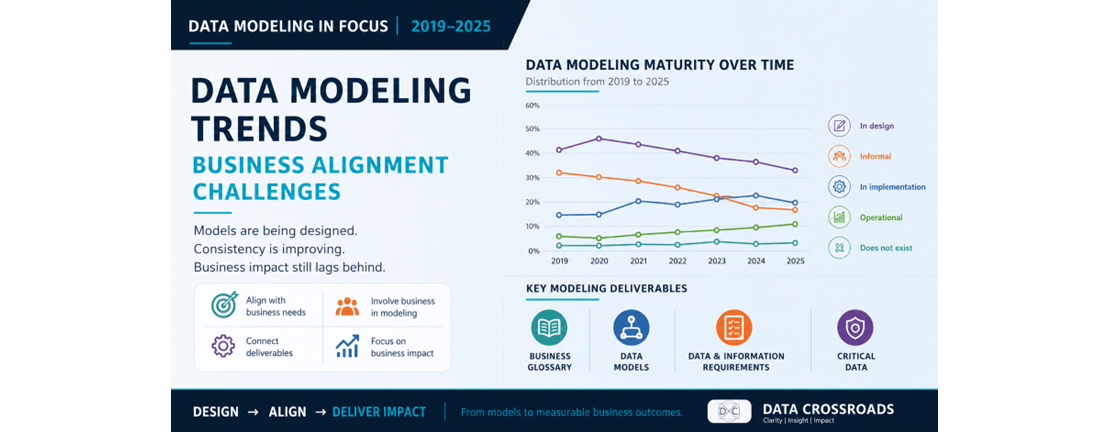
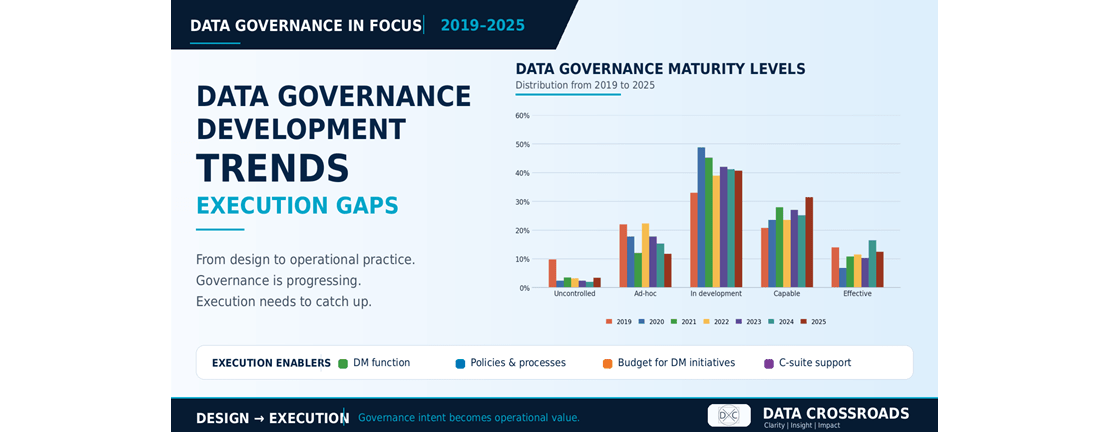
This article explores data management development trends from 2019 to 2025 and what they reveal about strategic readiness.
This article opens Data Management Maturity in Motion: an updated series on global trends and the growing role of maturity measurement from 2019 to 2025.
I have shared earlier versions of these trends before. The 2025 results now extend the view and strengthen the trend line.
When I look at maturity results, I see more than scores. I see how organizations move from ambition to practice. Some data management areas grow steadily. Others still show a gap between formal plans and daily execution.
That is why this first article starts with the broader picture. It provides the basis for identifying trends before the series moves into more detailed analysis.
This article will discuss:
- The changing role of maturity measurement
- The approach to measuring data management maturity based on the O.R.A.N.G.E. Data Management Framework (DMF).
- General maturity trends for the overall data management
- Recommendations on how to assess and implement the changed role of the maturity measurement capability
The following articles will focus on specific data management areas and explore their development in more detail.
Data Management Maturity Measurement Gains a Wider Role.
Organizations have often used data management maturity assessments as diagnostic exercises. It helps compare the current state with the desired state. It also supports planning by showing what already exists and what still requires attention.
However, maturity measurement can play a wider role. It helps organizations assess whether previous improvement efforts delivered visible progress. After that, the next planning cycle starts from evidence rather than assumptions. Benchmarking adds another angle by showing how maturity changes over time or differs across organizational units.
In my current work, I connect maturity measurement with two broader concepts: the data management control framework and a rolling data management strategy. The control framework brings evidence together. Maturity results show whether the required capabilities exist and are being developed. Performance management shows whether these capabilities deliver results. And the control framework ensures and assesses the evidence.
Together, these signals keep the strategy active. They help organizations adjust priorities, roadmaps, and investments as reality changes.
The O.R.A.N.G.E. DMF Provides the Methodology for Measuring the Maturity of the DM Capability at Different Levels.
Data Management Capability
The O.R.A.N.G.E. Data Management Framework (DMF) defines the data management (DM) capability as follows:
The definition of a business capability comes from two widely adopted business architecture guidelines—the TOGAF® Standard and BIZBOK—which use a shared definition proposed initially by Ulrich Homann in his 2006 paper A Business-Oriented Foundation for Service Orientation:
“A business capability is a particular ability or capacity that a business may possess or exchange to achieve a specific purpose or outcome.”
Picture 1 presents the data management model introduced in the O.R.A.N.G.E. DMF.
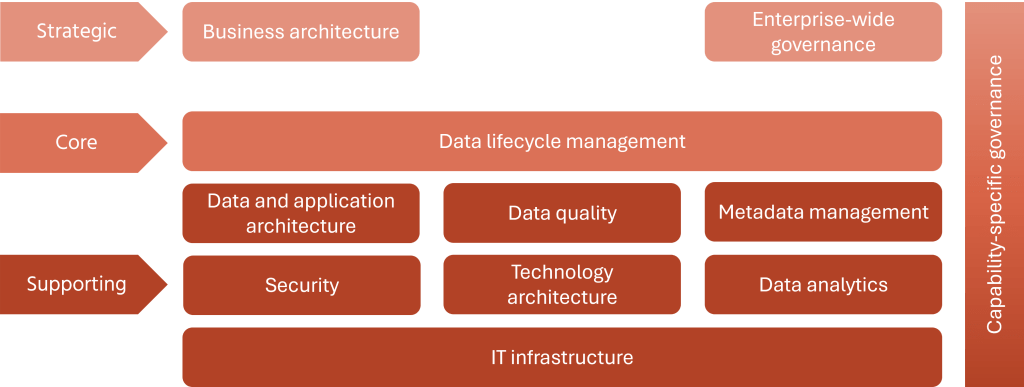
Figure 1: The DM capability model.
The data management capability is a set of sub-capabilities, each with its own role in delivering the core value: providing different stakeholders with information for decision-making.
The core capability, data lifecycle management, ensures the transformation of row data into meaningful information and, in doing so, provides the DM with business value. The set of supporting capabilities, such as enterprise architecture, security, and quality, enables the core capability. Several strategic capabilities link business goals with data management ones, define the direction for DM development, establish the framework for data management, and control its operations.
Every organization faces several common challenges in implementing data governance capabilities. First, it needs to understand which capabilities it requires, assess the scope of each capability that fits its resources and needs, and then bring these capabilities into operations. In my practice, I use a simple method to solve these challenges, as demonstrated in Figure 2.
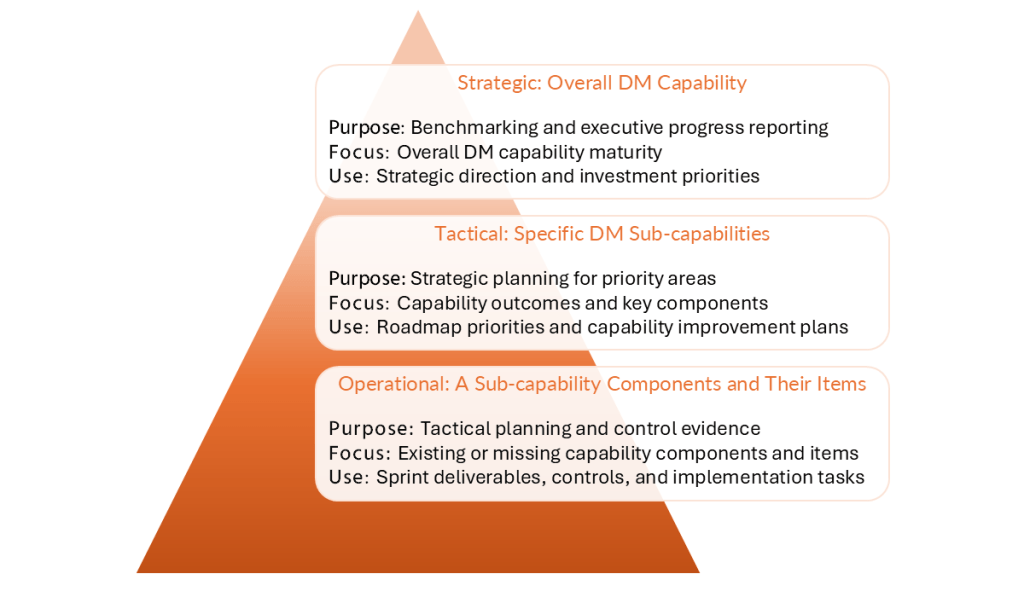
Figure 3: Measuring DM maturity at different levels.
First, you need to understand the purpose of this capability. In simple terms, answer the question: “Do we need this capability, and if yes, then why?” If the answer is positive, you need to consider how to assess whether the capability delivers the expected business value. You do so by defining the outcomes that are measurable results. These results can be measured by the set of outputs/artifacts that require corresponding inputs and processes. Several enablers, such as policies, roles, and tools, ensure that these outputs and outcomes are produced consistently and repeatably.
Data Management Maturity
Based on the data management capability model, we can assess the maturity of the data management (DM) capability at several levels: the overall DM capability, its core areas, the components of a specific capability, or the items within a component.
Let me briefly demonstrate what this means (see Figure 3).
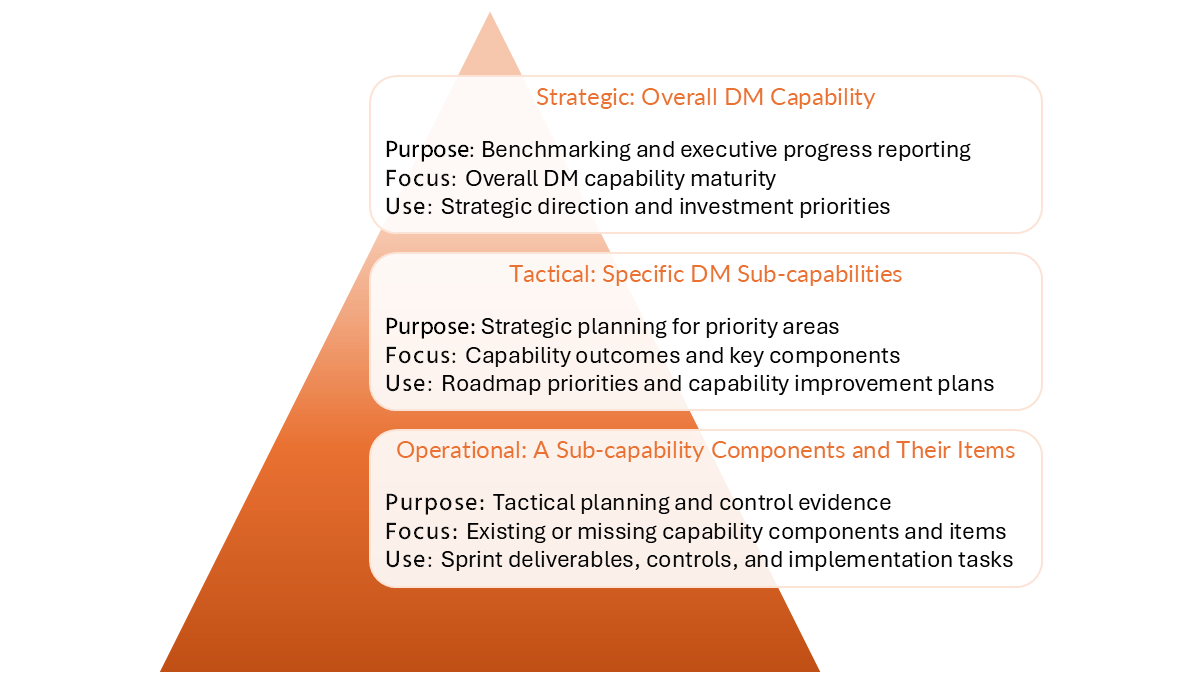
Figure 3: Measuring DM maturity at different levels.
An organization may want to know the overall maturity of its data management capability for benchmarking and executive reporting. However, strategic planning requires a more detailed view. For example, if the organization links better decision-making to improved data quality, it needs to assess the maturity of the data quality capability separately.
To turn strategic plans into tactical plans, the organization then needs to move one level deeper. It needs to check whether the relevant data quality policies, roles, processes, and tools exist. Yet this level may still be too broad for sprint planning. At that point, the organization may need to identify a more specific deliverable, such as a data quality requirements template.
This example shows how maturity measurement connects planning, performance management, and control. Planning uses maturity results to decide what to build next. Performance management checks whether improvement efforts deliver the expected progress. The control framework verifies whether the required capability components exist and work as intended.
Trends in the Maturity of the Holistic Data Management Capability
Overall DM Maturity Remains in the Middle Range.
The first trend examines the overall maturity of the data management capability, as shown in Figure 4. This view gives a broad starting point before the article moves into more detailed areas of data management.
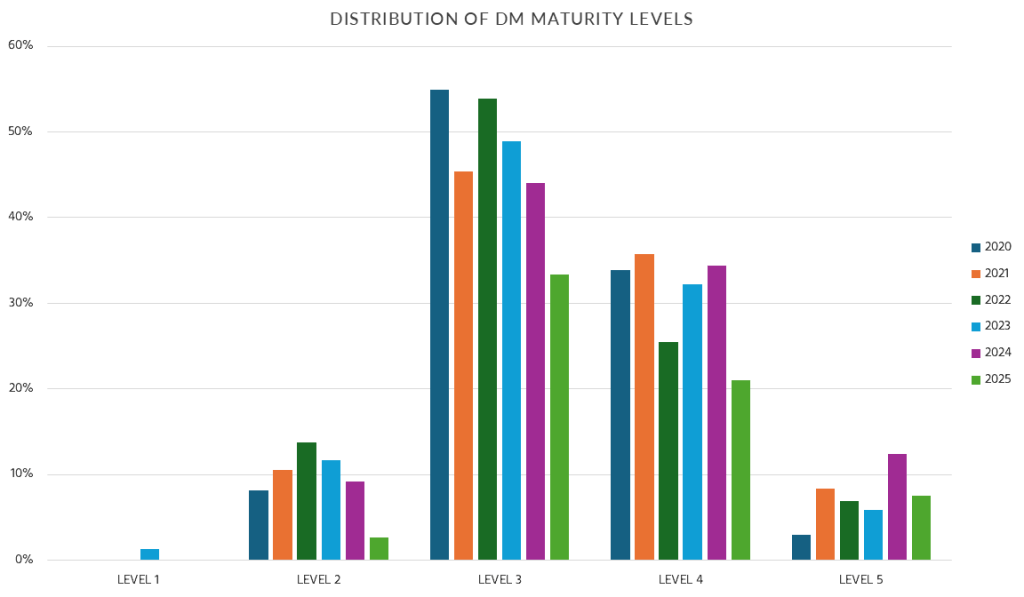
Figure 4: Maturity trends in holistic data management capability.
Core Components of the Holistic DM Capability Show a More Balanced Maturity Pattern.
The next view looks inside the holistic data management capability. It compares the maturity of four core components: roles, processes, data, and tools, demonstrated in Figure 5.
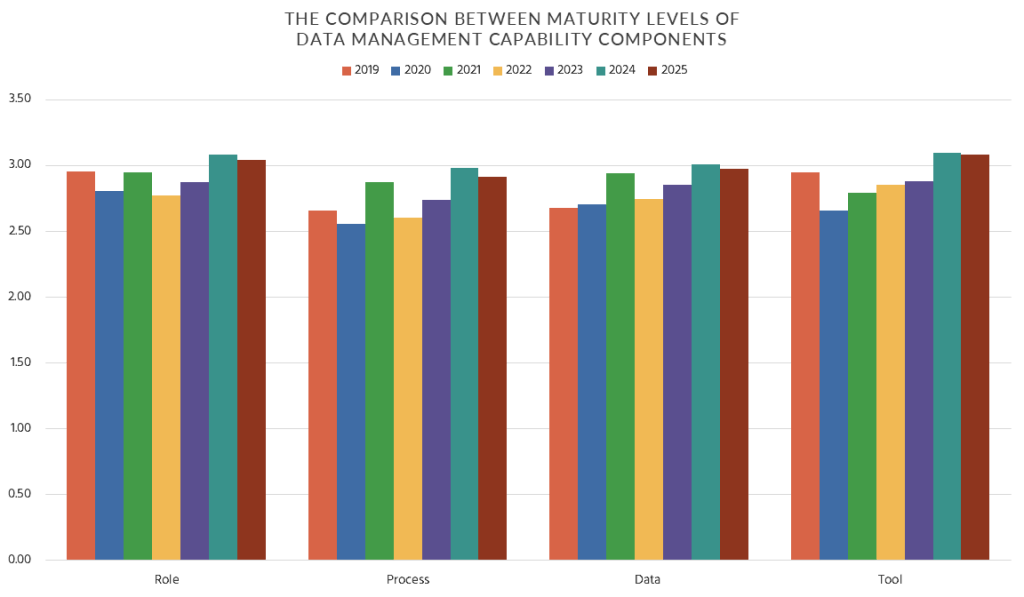
Figure 5: Maturity trends in core components of the holistic DM capability.
The first message is that all four components stay within a relatively close maturity range. None of them develops far ahead of the others. This is important because data management maturity rarely grows from a single component alone. Roles need processes. Processes need data-related practices. Tools need both roles and processes to create value.
The trend also shows gradual improvement in the later years. Roles and tools appear slightly stronger at the end of the period. Data also moves toward a more mature position. Processes improve as well, although their development looks less stable over the years.
For me, this picture shows a familiar organizational reality. Many organizations can invest in tools or define responsibilities faster than they can embed stable processes. Yet sustainable maturity depends on the balance between all components.
The main conclusion is practical. A holistic data management capability requires more than stronger individual parts. Organizations need to integrate roles, processes, data practices, and tools into a single working system.
Core DM Sub-Capabilities Develop at Different Speeds.
The next trend looks at the maturity of core data management sub-capabilities (see Figure 6). This view helps us move from the overall picture to the areas that create the data management capability in practice.
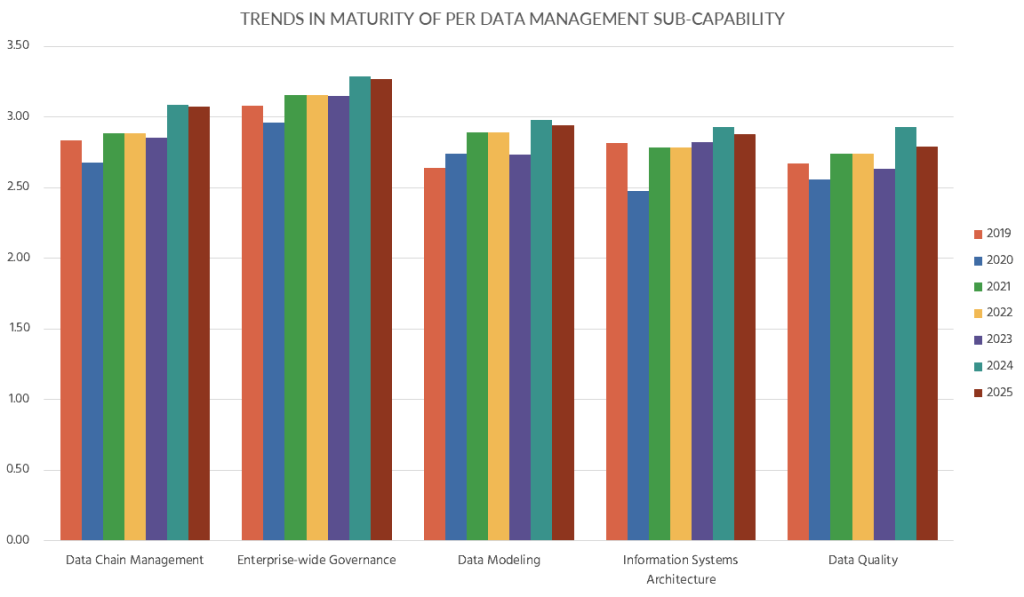
Figure 6: Maturity trends in core DM sub-capabilities.
Summary
The six-year maturity trends show steady development rather than a dramatic shift. Data management maturity continues to concentrate around the middle levels. This means many organizations have moved beyond initial awareness. Yet the step toward stable, continuously managed execution still requires greater attention.
The component-level view adds another important message. Roles, processes, data, and tools develop within a relatively close range. This confirms that data management maturity grows as a system. A strong tool landscape has limited value when roles remain unclear. Strong roles also deliver limited value when processes and controls lack consistency.
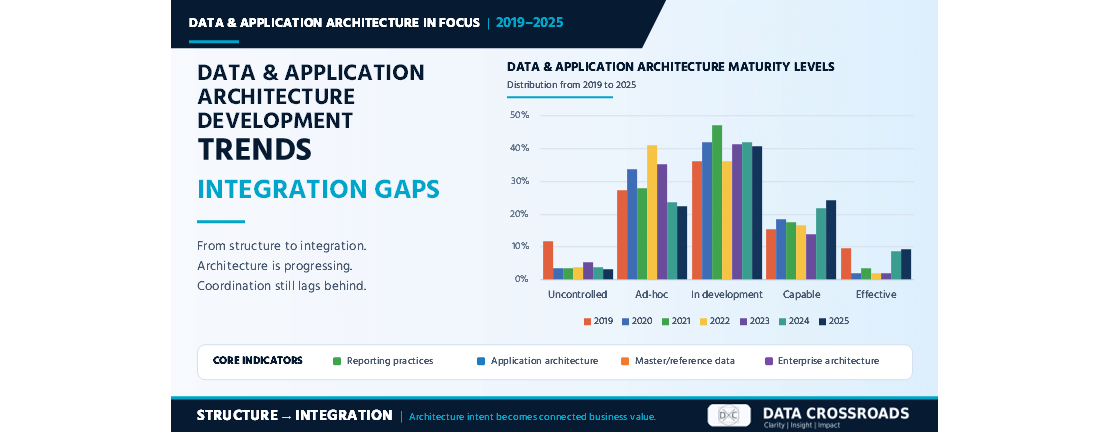
The sub-capability view shows a more differentiated picture. Enterprise-wide governance remains one of the stronger areas. Other areas, such as data quality, data modeling, information systems architecture, and data chain management, need continuous coordination. These areas matter even more now because they create the foundation for AI governance and AI-enabled operations.
Recommendations
AI changes the maturity discussion. Organizations can no longer assess data management maturity only as an internal data discipline. AI depends on trusted data, clear lineage, reliable metadata, data quality, architecture, controls, and accountability. As a result, data management maturity becomes part of a broader data and AI governance agenda.
Organizations can follow a set of recommendations to move from periodic maturity assessment to an integrated rolling management system.
- The process starts with positioning maturity measurement as a management mechanism.
Maturity assessment provides more than a status report. It helps organizations compare the current state with the required state. It also supports planning, investment decisions, and executive conversations about priorities.
- A natural next step involves connecting maturity assessment with performance management.
Maturity shows whether the required capabilities exist and develop. Performance management shows whether these capabilities produce expected results. Together, they create a stronger evidence base for decision-making.
- The approach benefits from linking maturity results with the control framework.
A control framework helps organizations verify whether policies, roles, processes, tools, and other capability components work as intended. Maturity results show capability strength. Control evidence shows whether this strength translates into reliable execution.
- AI governance requires data management maturity evidence.
AI initiatives need trusted data inputs, clear data chains, documented architecture, reliable quality controls, and accountable roles. Maturity assessment helps reveal whether these foundations can support AI use cases at scale.
- A rolling strategy framework creates the connection between evidence and action.
A model such as A.D.A.P.T. can connect ambition, diagnostics, assurance, progress, and tuning. In this logic, maturity assessment supports diagnostics. Performance management shows progress. The control framework provides assurance. Roadmap updates turn evidence into the next action cycle.
- The next planning cycle can start from integrated evidence.
Organizations gain a stronger planning rhythm when maturity scores, KPI results, control findings, and AI-related risks come together. This allows teams to adjust priorities with a clearer view of what works, what remains weak, and where the next investment creates value.
- The most important shift concerns the role of maturity measurement.
Maturity measurement becomes more significant when it moves from a periodic assessment to a permanent part of governance. It helps organizations manage data and AI capabilities as living systems. These systems need regular evidence, adjustment, and coordination across strategy, execution, and control.