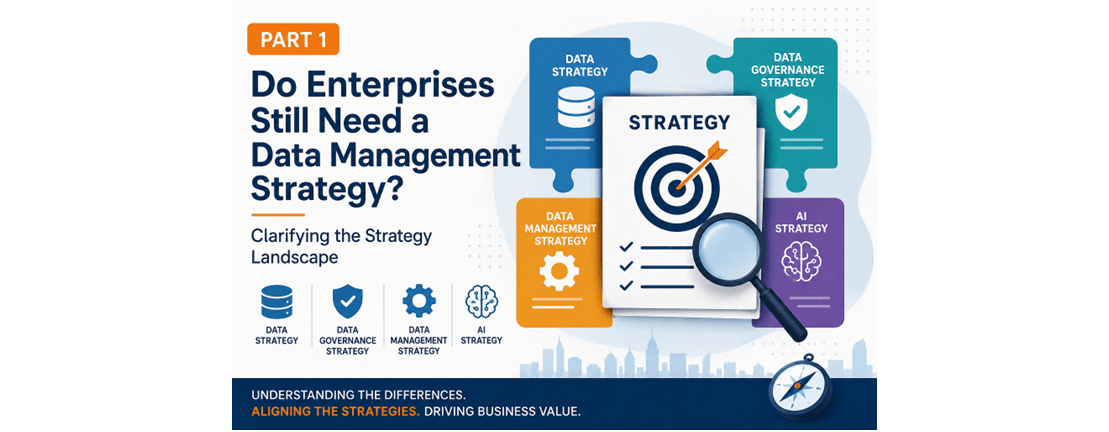
In this article, I want to introduce you to a new concept for rolling DM and AI strategy.
In the previous article, I shared my viewpoint on aligning terminology for the “strategy” concept across data, data management, data governance, and AI. As I have shown, the inconsistency in terminology in our community creates a lot of confusion. However, in my opinion, the name of the strategy is less important than its essence: it must define the business value of data and how data must be managed to deliver that value.
However, the most important question remains unanswered: Does an enterprise still need a DM and AI strategy in such an unpredictable business and technological environment? It should be clear that nowadays, spending months and resources developing multi-year strategies while business environments change so rapidly does not make sense.
My answer is yes, but… we need to change the approach to developing and adjusting the strategy so that the document remains adequate and useful.
Rolling DM & AI Strategy Turns Long-Term Planning into Quarterly Evidence-Based Adjustment
I arrived at this answer by comparing two situations that, at first sight, may look different: financial planning and data management strategy.
As I have a financial background, the comparison came quite naturally to me. Years ago, many organizations started moving from traditional annual budgeting to rolling budgeting and rolling forecasting. The reason was simple. A fixed annual budget often became outdated too quickly. Markets changed. Costs changed. Customer behavior changed. Business priorities changed. So, organizations needed a way to review assumptions more frequently and adjust plans before the gap between planning and reality became too large.
I see a very similar situation with data management and AI strategy.
Of course, I do not mean that an enterprise should rewrite its strategy every quarter. That would create chaos, not flexibility. But I also do not believe that an organization can develop a three- to five-year DM or AI strategy and blindly follow it while business priorities, regulations, technologies, and risks keep changing around it.
So, my answer to the question I asked at the beginning of this article is the following: yes, an enterprise still needs a DM and AI strategy. But this strategy should not be treated as a static document. It should become a rolling management mechanism.
For me, “rolling” means a regular quarterly review. Not a full redesign. Not a new strategy every three months. It means that every quarter, the organization checks whether the strategy still reflects business reality. The logic is similar to rolling budgeting and forecasting. In finance, the organization reviews actual results, checks deviations, updates assumptions, and adjusts the forecast. In data management and AI, the organization can do the same with strategic ambition, performance results, control evidence, maturity progress, and roadmap priorities.
This is why I propose the A.D.A.P.T. methodology.
The A.D.A.P.T. Approach Demonstrates How to Roll DM and AI Strategy in Practice.
The A.D.A.P.T. approach is based on the O.R.A.N.G.E. Data Management Framework, my core methodology for designing, implementing, and improving data management capabilities. This link is important because the O.R.A.N.G.E. DMF already provides methods, models, and templates behind the capabilities involved in the A.D.A.P.T. cycle.
Figure 1 demonstrates the logic of this model. It includes five connected steps: Ambition, Diagnostics, Assurance, Progress, and Tuning. Together, they create a quarterly rhythm for keeping the strategy current, realistic, and executable.
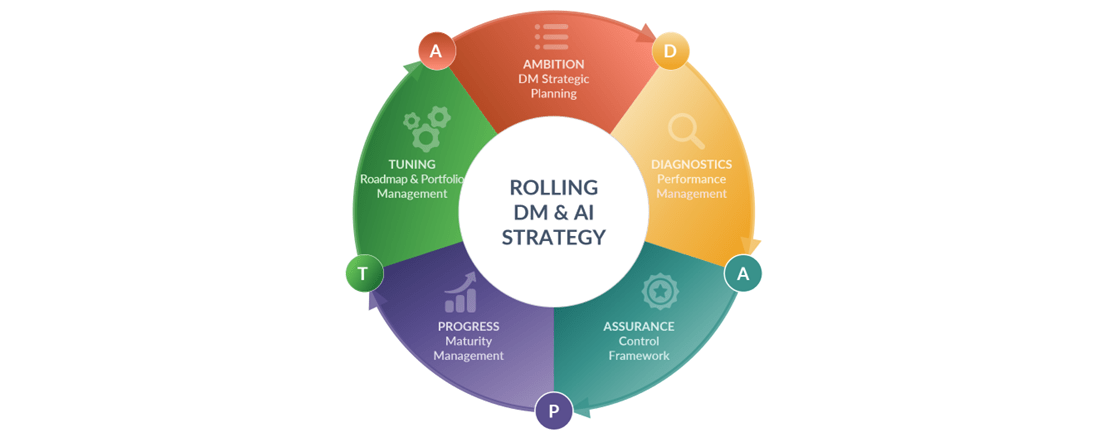
Figure 1: The A.D.A.P.T. Approach to Rolling Data Management and AI Strategy.
“Ambition” checks whether the strategy still fits.
Ambition is the starting point.
At this step, an organization defines why data and AI matter for the business and what value they should deliver. It also identifies which data management and AI capabilities should become priorities. In a quarterly review, ambition does not need to change every time. But it must be checked. Are the business drivers still the same? Have new regulatory, technological, or market pressures appeared? Are the selected priorities still relevant? Without this regular check, the strategy may continue moving in a direction that no longer fits the business.
“Diagnostics” shows whether the strategy execution moves as expected.
Diagnostics comes after ambition.
To perform the step, the organization needs a performance management capability in place. Otherwise, it cannot clearly see whether the strategy is working. The logic is simple. The strategy defines what the organization wants to achieve. Performance management shows whether the organization is actually achieving it. During the quarterly review, the organization compares planned results with actual results. It looks at KPIs, targets, deviations, and trends.
This helps answer very practical questions. Are we moving at the expected speed? Are the results strong enough? Are some initiatives underperforming? Are new risks or priorities changing the picture?So, diagnostics is not just measurement. It is the moment when the organization begins to assess whether the strategy still reflects reality.
“Assurance” verifies whether results can be trusted.
Assurance comes after diagnostics.
The organization needs a control framework in place to verify KPIs trustfulness. KPIs can show what happened, but they do not always show whether execution was reliable. This is where controls become important. They show whether the required activities were performed, whether evidence exists, and whether accountability worked in practice.
During the quarterly review, the organization checks which controls were executed and what issues appeared. It also reviews whether escalation worked when something went wrong. This helps avoid a risky situation. The numbers may look positive, while the underlying processes remain weak or inconsistent.So, assurance connects strategy with control evidence. It helps the organization understand whether reported progress can actually be trusted.
“Progress” shows whether the organization has achieved the planned goals.
Progress comes after assurance.
Now, the maturity measurement capability comes to the scene. Performance management shows whether results move in the expected direction. The control framework confirms whether execution has reliable evidence. Maturity measurement adds a different view. It shows whether the organization has enough capability strength to achieve its strategic goals consistently.
This matters because one successful result does not prove that the organization can repeat it. A team may fix one issue, document one data chain, or improve one report. But the strategy requires more than isolated success. It requires a stable way of working that can support business goals across teams, domains, and initiatives.
During the quarterly review, maturity measurement compares the planned maturity target with the current state. It shows where the organization can already deliver the expected outcomes and where capability gaps still limit strategic progress.
So, Progress helps the organization understand whether it has enough capability maturity to achieve the goals defined in the strategy. It connects strategic ambition with the organization’s real ability to deliver.
“Tuning “adjusts the strategy for the next cycle.
Tuning closes the quarterly review and turns its findings into action.
By this point, the organization has already checked the external environment, reviewed performance results, examined control evidence, and assessed maturity progress. Now it needs to decide what these findings mean for the next quarter.
Some priorities may still make sense. Others may need more funding, stronger ownership, or a different timeline. In some cases, the organization may decide to slow down one initiative and accelerate another. New regulations, business risks, technology changes, or resource constraints can also shift the roadmap.
This is where the rolling strategy becomes practical. The organization does not wait for the next annual planning cycle. It uses quarterly evidence to adjust direction while the strategy still guides active decisions.
So, Tuning connects learning with adjustment. It keeps the DM and AI strategy aligned with business reality, without turning every quarterly review into a full strategy redesign.
Strategy Should Stay Close to Reality.
In my view, this is exactly what organizations need now. Not less strategy, but a different way of working with strategy.
A DM and AI strategy should still give direction. It should still help people align decisions and priorities. But it also needs to stay close to evidence, execution, and business change.
This is where the rolling approach makes sense to me. It keeps the strategy active after approval. It creates a regular moment to check whether the organization still moves in the right direction and whether the roadmap still reflects reality.
I have developed multiple Data Crossroads Academy courses that support different parts of this logic. They help organizations move from strategic ambition to practical capability development.
So, for me, the key message is simple. A strategy should not disappear into a document archive after approval. It should remain active, visible, and useful for real decisions.