This article examines how organizations use AI frameworks for strategy development to structure their ambitions and respond to growing regulatory expectations.
Many organizations are rapidly expanding their use of AI, while regulatory expectations continue to intensify. The previous articles in this series examined these legislative developments and clarified how regulators define responsible and trustworthy AI. To meet these obligations in practice, organizations need an internal governance framework that translates regulatory principles into actionable structures, processes, and oversight mechanisms.
Industry frameworks are frequently used as a foundation for this work. They offer structured guidance, maturity benchmarks, and practical recommendations for designing AI strategy and governance. Yet it is not always evident how easily these frameworks can be applied, how well they support regulatory alignment, or how much adaptation they require to fit a specific organizational context.
This article starts the analysis of industry frameworks to support the broader goals of the series, which are to:
- Understand how leading industry authorities conceptualize and organize AI-related frameworks.
- Assess whether industry frameworks can be adopted easily by organizations.
- Identify how these frameworks may need to be adjusted to fit regulatory, operational, and business needs.
This article starts that analysis by examining where each industry framework is intended to apply and which part of AI practice it aims to support.
Industry frameworks differ significantly in both coverage and approach.
The analysis draws on frameworks published by NIST, Microsoft, ISO, Gartner, IBM, Harvard, Stanford, and Accenture, using only publicly accessible materials. Government-issued recommendations are intentionally excluded because their regional specificity limits comparability across the selected sources.
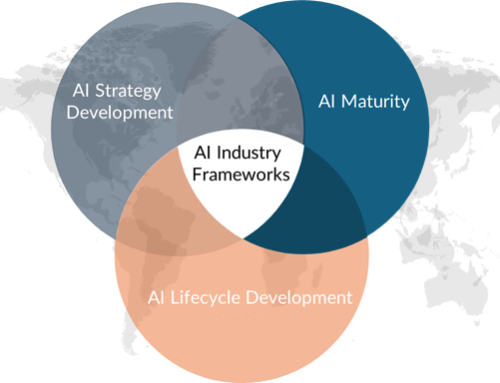
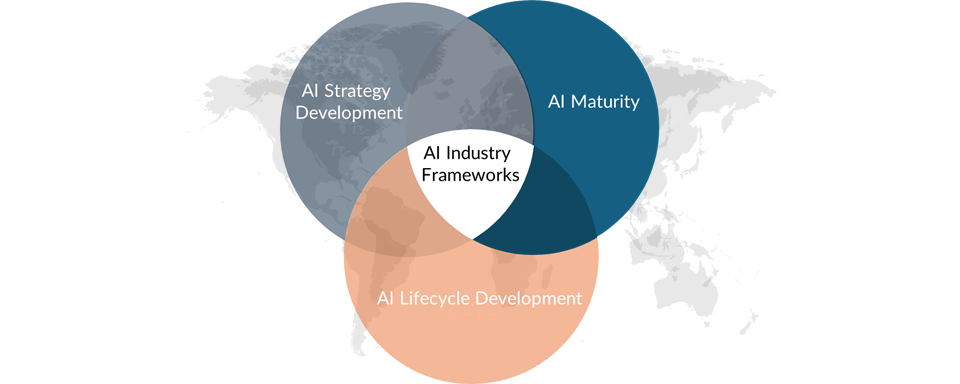
A clear pattern emerges when these frameworks are considered together: they vary widely in what they cover, and in the methods they use to guide organizations. Some emphasize the development of an AI strategy, others concentrate on maturity assessment, and several focus on governing the AI lifecycle, including roles, processes, and operational controls. These variations fall naturally into two dimensions.
The first dimension concerns coverage, showing whether a framework addresses AI strategy development, maturity measurement, and lifecycle governance. The second dimension relates to the approach, distinguishing whether guidance relies on principles, risk classification, and mitigation, or a hybrid methodology that blends both.
Table 1 summarizes these findings by mapping each framework to its level of coverage and identifying the approach it takes. The combined results reveal a diverse landscape in which frameworks share a common intention — supporting responsible AI adoption — yet differ markedly in their scope, structure, and underlying philosophy.
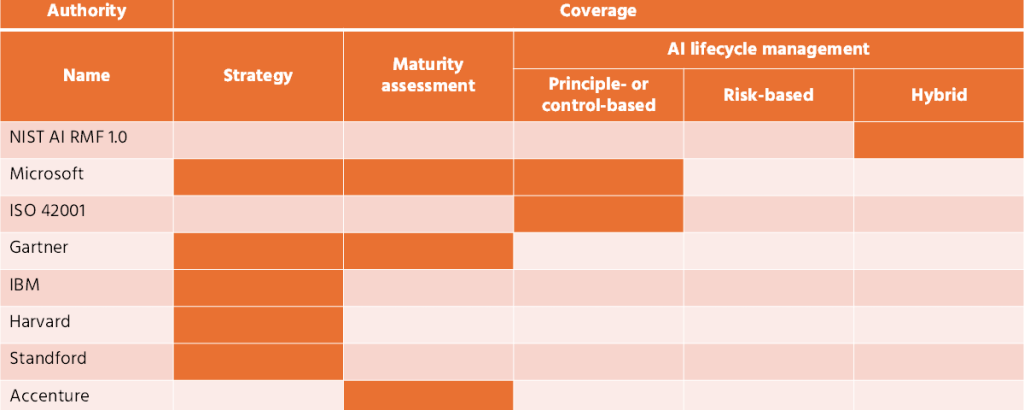
Table 1. Coverage of AI strategy development components across industry frameworks.
Let’s start the analysis with recommendations for an AI strategy development.
Developing an AI strategy is addressed differently across industry frameworks.
This part of the analysis examines how five leading industry authorities describe the development of an AI strategy. Their guidance varies across two dimensions: the areas they address and the depth of content they propose. Across the reviewed materials, three themes consistently distinguish the frameworks from one another:
- The factors they consider influential in shaping an AI strategy.
- The steps they outline for developing the strategy.
- The suggested content for the final AI strategy document.
Table 2 summarizes which sources address each component.

Table 2. Coverage of AI strategy development components across industry frameworks.
Impact Factors
Microsoft’s AI Strategy Roadmap highlights several drivers of AI readiness that shape an organization’s AI maturity. These drivers reflect the interdependence between business goals, technological foundations, and organizational structures. They include:
- Business strategy
- Technology and data strategy
- AI strategy and accumulated experience
- Organization and culture
- AI governance
Together, these factors position AI as an integrated business capability rather than a stand-alone technical initiative.
Strategy Content
Gartner provides extensive guidance on the structure and content of an AI strategy in several publications, including The Q1 2025 CIO Report, Learn to Build an AI Strategy for Your Business, GenAI Planning Workbook, The CIO’s Guide to Building an AI Roadmap That Drives Value, and AI Roadmap at a Glance. The content and structure presented across these sources differ, suggesting that Gartner’s recommendations continue to evolve as AI practices mature.
Table 3 compares the suggested content of two of these documents.
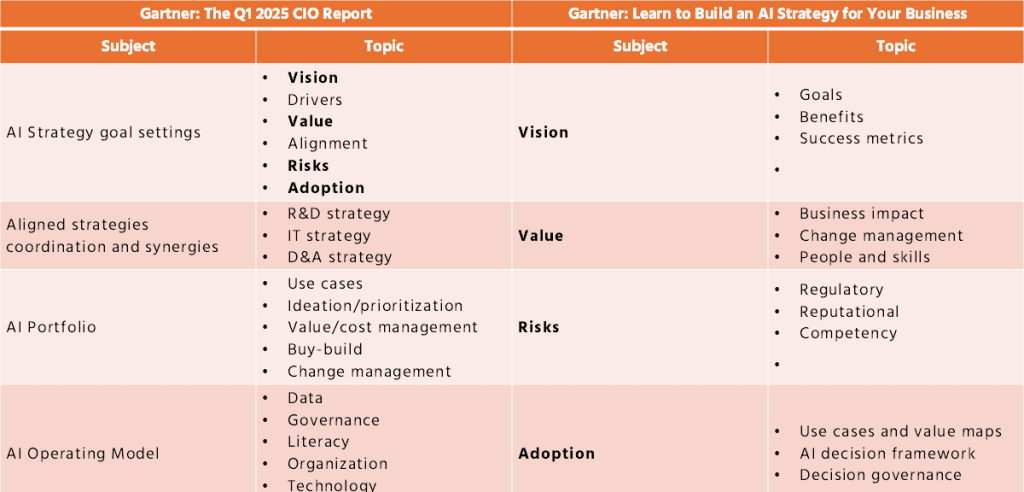
Table 3. The comparison of Gartner’s frameworks for AI strategy content.
The first provides broad categories such as goal setting, alignment with other enterprise strategies, AI portfolio management, and the operating model. The second builds on several areas introduced earlier and offers more detailed direction for execution, measurement, and outcomes. Together, they provide a complementary view that bridges strategic intent with actionable steps.
Steps in Implementing an AI Strategy
Table 4 brings together the steps proposed by the five industry authorities included in the analysis. The comparison shows meaningful variation in how the authors structure the sequence, scope, and emphasis of strategy implementation.
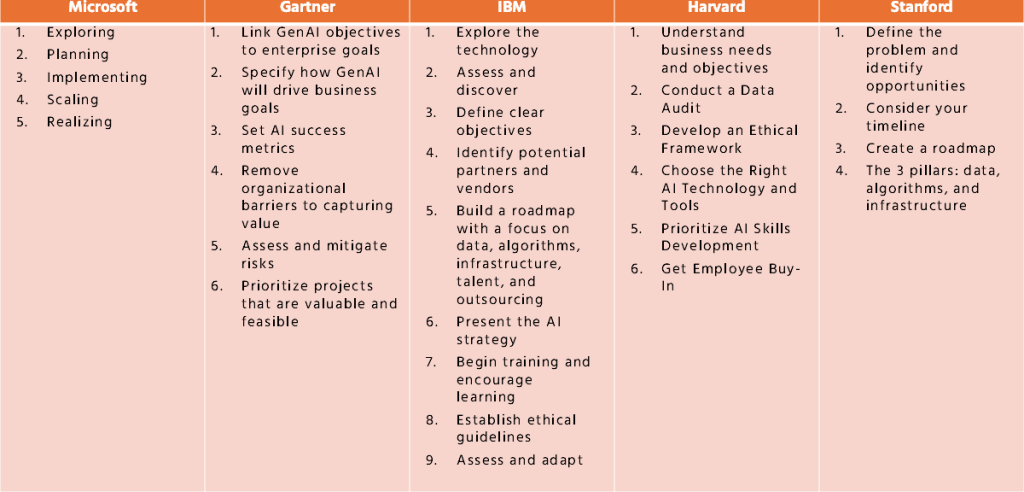
Table 4. The comparison of steps in implementing an AI strategy.
Key Observations from the Analysis
Several conclusions emerge from this review:
- Industry authorities describe notably different approaches to developing an AI strategy.
The steps differ in number, content, and logical flow. Microsoft links its steps to the maturity levels of AI readiness. Gartner, IBM, and Harvard generally begin with identifying business needs and objectives, while IBM introduces technological considerations earlier in the process. - Despite structural differences, several common pillars appear across frameworks.
Data, algorithms, infrastructure, and people consistently emerge as foundational elements that underpin effective AI strategy development. - Although the methodologies vary, there is apparent convergence around the core resources and capabilities required for successful AI adoption.
As a result, organizations can use these diverse perspectives to develop AI strategies that align with their business goals, technological maturity, and organizational context.
Organizations can follow a set of recommendations to guide the development of their AI strategy.
1. The process starts with clarifying the organization’s purpose for adopting AI.
A clear view of why AI matters to the business creates a natural anchor for all subsequent decisions. This step helps organizations identify which opportunities or challenges AI is expected to address and how these ambitions align with broader strategic goals. It also provides an early reference point for evaluating which industry frameworks offer the closest alignment.
2. The next natural step involves identifying internal and external factors that influence AI readiness.
These factors often include data foundations, technology landscapes, skills, governance arrangements, and cultural attitudes toward innovation. Understanding them early offers a realistic sense of what the organization can accomplish in the short term and what capabilities may need to evolve. This assessment also helps determine which parts of industry frameworks require adaptation.
3. A thoughtful review of relevant industry frameworks can help reveal suitable structures and practices.
Each framework brings its own strengths, conceptual language, and areas of emphasis. By comparing their coverage and underlying approaches, organizations can detect which elements resonate with their operating context. This comparison supports informed decisions on what to adopt directly and what to tailor.
4. A natural next step involves defining the core components of the AI strategy.
These components typically reflect how AI aligns with business priorities, how it integrates with data and technology strategies, and how its value will be realized and measured. Establishing these elements creates a coherent structure for the AI strategy document and helps ensure consistent communication across the organization.
5. The organization should consider how AI governance and lifecycle management will be embedded into the strategy.
Governance structures, decision-making processes, and accountability mechanisms shape how AI is developed, deployed, monitored, and improved over time. When these elements are included from the outset, the AI strategy gains operational depth and regulatory alignment. This integration also ensures that AI initiatives remain transparent, responsible, and well-controlled.
6. A further step involves outlining the capabilities required to implement the strategy.
Data, infrastructure, talent, and cross-functional collaboration frequently emerge as essential enablers. By mapping current capabilities against desired outcomes, organizations can visualize what needs strengthening or redesigning. This view supports planning that is both ambitious and realistic.
7. The strategy naturally benefits from a roadmap that connects ambition with execution.
A roadmap translates strategic intentions into phased activities, timelines, and measurable milestones. It also offers clarity on how priorities evolve as organizational maturity grows. With this roadmap in place, the strategy becomes not only a conceptual document but a practical guide for coordinated progress.
8. Periodic reassessment ensures the AI strategy remains relevant and effective.
AI landscapes evolve quickly, and business priorities shift alongside changing technologies and regulatory expectations. Regular reflection helps organizations adjust their strategy, refine their governance practices, and incorporate emerging insights. This adaptability supports long-term resilience and responsible AI adoption.
The next article will examine how industry frameworks approach the measurement of AI maturity.