Are YOU considering Data Governance as a career path?
Many professionals who work with data eventually encounter governance responsibilities.
Sometimes this happens intentionally when organizations launch formal governance initiatives. In many other cases, however, it happens much more gradually. Someone needs to clarify definitions across systems. Someone has to resolve recurring data quality issues. Someone needs to coordinate reporting rules between departments.
And slowly, governance work becomes part of the role.
That is usually the moment when a more personal question starts to appear:
Is data governance simply another task added to an existing role, or can it actually become a professional career path?
For some readers, the question is about starting a career in governance. Others are already working as analysts, architects, or data stewards and are wondering whether they can grow further in this field and what the next steps might look like.
The difficulty is that governance roles are not always clearly structured. Job titles differ across organizations. Responsibilities often overlap. And it can be difficult to see how operational governance work connects to broader leadership roles.
To better understand how governance careers actually develop in practice, I asked AI to perform a large-scale analysis of job postings across major recruitment platforms such as LinkedIn, Indeed, and Glassdoor. The research synthesized signals from approximately 128,000 governance-related vacancies worldwide published during the previous calendar year.
After reviewing the results, several clear patterns emerged. They reveal not only where governance jobs exist, but also how governance careers tend to evolve across organizational levels.
Governance Roles Across Organizational Levels
When reviewing governance job descriptions in detail, it becomes clear that governance roles differ not only by title but also by their position in the governance structure and by the professional background of the specialists performing them.
Table 1 presents the results of the analysis.
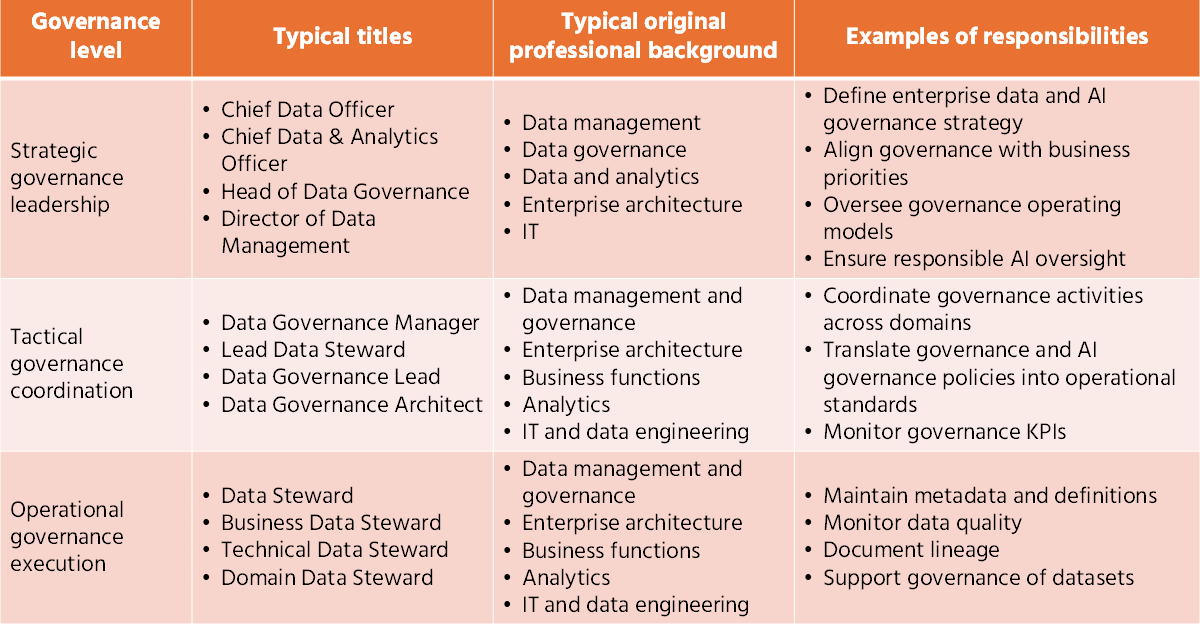
Table 1: Analysis of the governance roles per organizational level.
Although organizations use a wide variety of titles, most governance roles fall into three broad groups that correspond to strategic leadership, tactical coordination, and operational execution. These groups reflect how governance work is organized in practice: from defining governance direction, to coordinating governance activities across domains, to implementing governance practices in day-to-day data management.
The table above summarizes these three role groups by typical titles, professional backgrounds, and examples of responsibilities.
Strategic governance leadership
Strategic governance roles define the overall direction of data and AI governance within the organization. These positions typically appear at executive or senior leadership levels and are responsible for ensuring that governance supports broader business priorities.
Professionals in these roles often come from backgrounds in data management, data governance, enterprise architecture, analytics leadership, or IT leadership. Their responsibilities focus on defining governance strategy, aligning governance initiatives with business priorities, establishing governance operating models, and ensuring appropriate oversight of data and AI usage across the organization.
Because these roles combine governance expertise with organizational leadership, they represent the strategic layer of governance careers.
Tactical governance coordination
The second group of roles focuses on coordinating governance practices across domains and teams. These positions translate governance policies into operational standards and ensure that governance activities remain aligned across business functions.
Professionals in these roles often come from backgrounds in data management, enterprise architecture, business functions, analytics, or data engineering. Their responsibilities typically include coordinating governance activities across domains, translating governance and AI governance policies into operational standards, and monitoring governance performance through KPIs.
These roles represent the tactical layer of governance, where governance frameworks are transformed into working practices across the organization.
Operational governance execution
Operational governance roles represent the execution layer of governance practices. Professionals in these roles work closest to the data itself and ensure that governance standards are applied consistently in everyday data operations.
Data stewards and similar roles frequently originate from professional backgrounds in business functions, analytics, data management, enterprise architecture, IT, or data engineering. Their responsibilities often include maintaining metadata and definitions, monitoring data quality, documenting lineage, and supporting governance of datasets used in analytics and AI initiatives.
Because these roles operate closest to operational data processes, they often become the entry point into governance careers.
In the following articles of this series, we will examine each of these role groups in greater depth.
Where Governance Roles Are Concentrated Globally
Another important insight from the analysis concerns where governance roles are concentrated globally and how they are distributed across governance layers.
Governance capabilities are expanding worldwide, as shown in Table 2. However, the structure of governance roles differs significantly between regions. Some markets exhibit more mature governance structures with strategic leadership roles, while others are still developing operational capabilities, such as stewardship and domain-level governance.
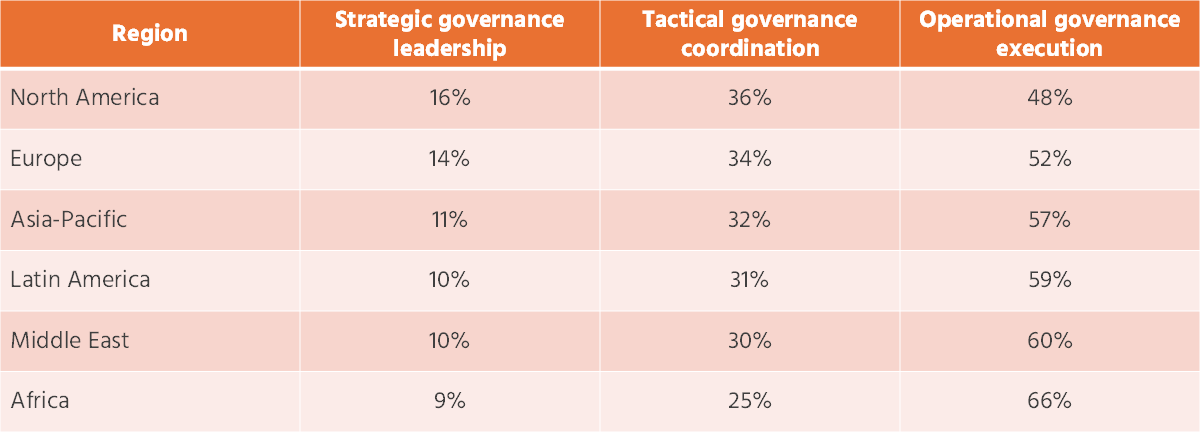
Table 2: The distribution of vacancies per region and per organizational level.
These figures reveal several important patterns about how governance capabilities develop across regions.
Strategic governance leadership remains limited
Strategic governance leadership roles represent the smallest share of governance vacancies globally.
Positions such as Chief Data Officer, Head of Data Governance, or Director of Data Management typically account for roughly 9–16 percent of governance hiring, depending on the region.
This distribution is consistent with how governance capabilities evolve organizationally. Strategic governance leadership roles usually appear after operational governance practices and coordination mechanisms are already in place.
Organizations first establish stewardship practices, then develop governance coordination roles, and only later formalize enterprise governance leadership to define governance strategy and oversee responsible AI and data usage across the enterprise.
Tactical governance roles enable scaling of governance
The second largest group of governance roles belongs to the tactical coordination layer.
These roles—such as Data Governance Managers, Lead Data Stewards, and Governance Architects—typically account for about one-third of governance vacancies globally.
Their primary function is to translate governance strategy into operational standards and coordinate governance activities across domains. They ensure that governance practices are implemented consistently and that governance policies are measurable and operationalized.
Regions with more mature governance environments show stronger representation of this tactical layer, reflecting the need to coordinate governance across multiple business domains, regulatory requirements, and technology platforms.
Operational governance remains the dominant entry point
Across all analyzed regions, operational governance roles account for the largest share of governance hiring. These positions include various forms of data stewardship and domain-level governance roles responsible for maintaining metadata, monitoring data quality, documenting lineage, and supporting the governance of datasets used in analytics and AI.
In mature governance markets such as North America and Europe, operational roles account for roughly half of governance vacancies. In emerging governance markets, including Africa, Latin America, and parts of Asia-Pacific, this share rises to almost two-thirds of all governance positions.
This confirms a pattern many practitioners observe: governance capabilities typically begin with operational execution before formal governance structures are established.
Core Data Management Capabilities Behind Governance Work
Governance roles support the execution of several core data management capabilities, ensuring data is managed consistently, transparently, and responsibly across the organization. When governance job descriptions are analyzed closely, these capabilities recur, although the associated responsibilities vary by organizational level.
Table 3 highlights the most visible governance capabilities and how responsibilities typically evolve across strategic, tactical, and operational levels. Rather than listing every possible task, the table focuses on the representative activities that characterize governance work at each level.
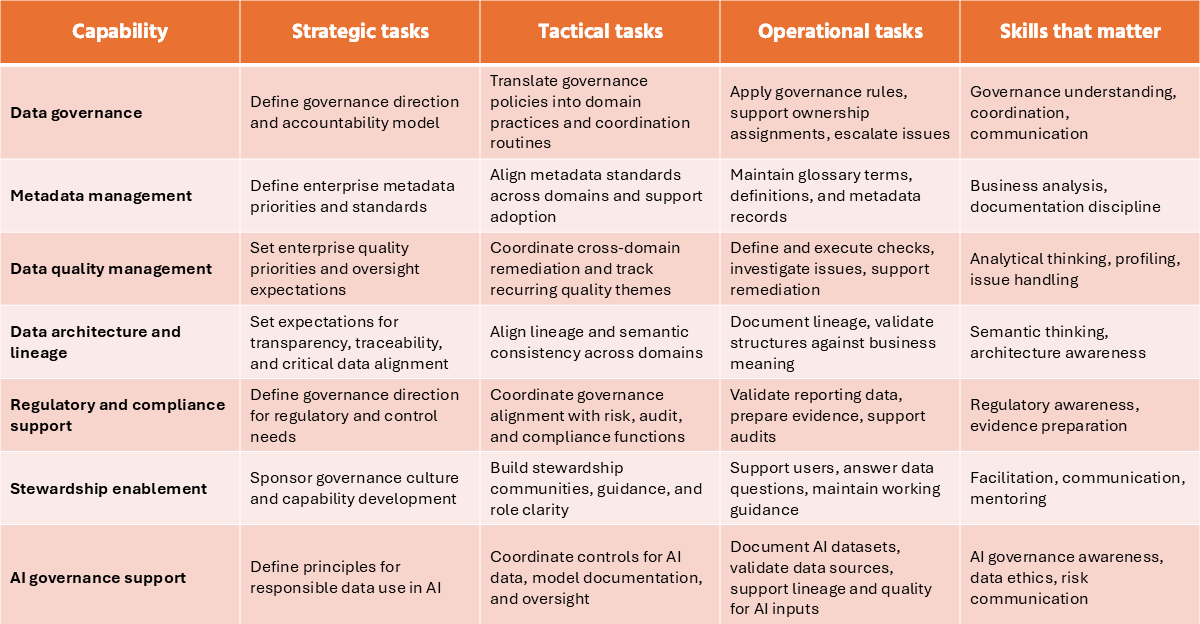
Table 3: Data and AI governance tasks per organizational level.
At the strategic level, governance responsibilities focus on defining direction and expectations. Leaders determine governance priorities, set enterprise standards, and ensure that governance capabilities support regulatory obligations, business strategy, and increasingly the responsible use of AI.
At the tactical level, governance professionals translate these directions into working practices. Their role centers on coordinating governance activities across domains, aligning governance standards, and ensuring that governance frameworks function consistently across the organization.
At the operational level, governance work becomes visible in daily data management activities. Data stewards and similar roles execute governance practices by maintaining metadata, monitoring data quality, documenting lineage, validating regulatory data, and supporting datasets used in analytics and AI initiatives.
Across all these capabilities, the table reveals an important insight: governance roles are rarely defined by a single technical specialization. Instead, governance professionals combine data management knowledge, analytical thinking, communication skills, and the ability to coordinate stakeholders across business and technology domains.
What These Statistics Reveal for Governance Career Development
The statistics presented throughout this analysis reveal several practical insights for professionals who are considering starting or advancing a career in data governance.
- Governance careers typically begin with operational experience.
Most professionals enter governance through operational roles, such as data stewardship or domain-level data management. These positions provide hands-on experience with metadata, data quality, lineage, and regulatory data validation—capabilities that form the foundation of governance expertise. - Career progression requires expanding from execution to coordination.
Moving toward tactical governance roles involves developing the ability to translate governance policies into operational practices and coordinate governance activities across domains. Professionals at this stage combine governance knowledge with stakeholder management and organizational alignment skills. - Strategic governance roles require an enterprise perspective.
Leadership positions in governance demand a broader understanding of how governance supports organizational strategy, regulatory obligations, and responsible AI usage. Professionals at this level focus less on operational execution and more on defining governance direction and ensuring enterprise-wide alignment. - AI governance is becoming a natural extension of governance careers.
As organizations integrate AI into business processes, governance professionals increasingly contribute to overseeing training data, model transparency, and responsible data use. This development expands the scope of governance roles beyond traditional data management.
These observations highlight an important challenge for professionals: governance careers often evolve organically, yet many organizations provide limited, structured guidance on developing the required capabilities across these levels.
Recognizing these realities, Data Crossroads Academy focuses specifically on the operational and tactical levels of governance careers.
Many organizations have already established data governance functions. However, they often face another challenge: governance work requires professionals who possess knowledge and skills across multiple disciplines. Organizations therefore need to develop internal staff—often with backgrounds in business, analytics, IT, or data management—into effective data stewards and governance professionals.
This development requires expanding knowledge beyond a single specialization. Governance professionals must understand several data management capabilities and how they work together in practice.
At the same time, even in organizations where governance functions already exist, many operational challenges remain unresolved. Governance frameworks may be defined, but practical implementation often encounters difficulties in areas such as stewardship coordination, metadata management, data quality practices, or cross-domain alignment.
For this reason, Data Crossroads Academy offers courses that focus on two key goals:
• supporting internal career development of data stewards and governance professionals, and
• helping organizations address practical operational challenges that appear when governance frameworks are implemented in practice.
In the next article, we will examine the Data Steward role in depth, exploring how operational governance responsibilities form the foundation of effective governance programs and how professionals can build expertise in this critical role.