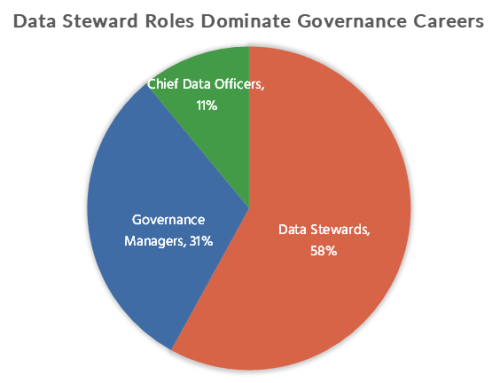
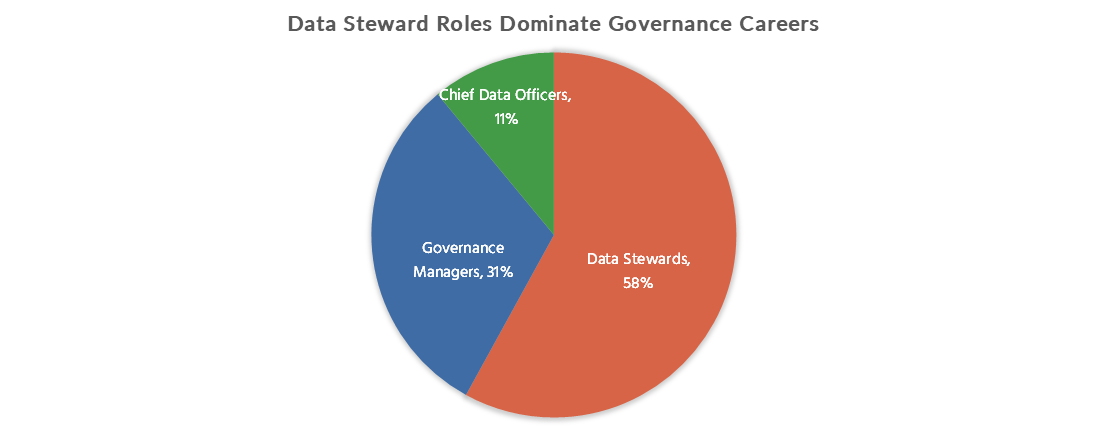
Data governance roles are not simply senior stewards.
They form a distinct layer in any organization—one focused on designing, embedding, and scaling governance as a lasting capability.
In the previous article, we explored how data steward roles operate across organizational levels. We also examined how their responsibilities are evolving into a broader data management profession.
From that perspective, a natural question begins to take shape.
Data stewards increasingly execute and coordinate governance practices.So what defines the broader category of data governance roles?
To explore this, I analyzed global job postings, role descriptions, and governance frameworks. The intention was to understand how organizations structure these roles in practice and what they truly expect from them.
A clear pattern begins to emerge.
Key finding
Data governance roles are not simply “senior stewards.” They represent a distinct layer within the organization, focused on designing, embedding, and scaling governance as a sustainable capability.
Analyzing Data Governance Roles Across Organizations
When you look across industries and regions, data governance roles reveal a consistent structure.
They operate at multiple organizational levels, yet their responsibilities do not always align clearly with job titles. The same title may represent execution in one organization and leadership in another. This creates a familiar situation. Roles appear defined, yet expectations feel blurred.
When attention shifts from titles to responsibilities, the structure becomes easier to recognize. Two main layers begin to stand out.
One layer focuses on execution and operational consistency.
The other focuses on design, coordination, and organizational control.
At the same time, the job market reflects growing demand. Thousands of active postings, especially at mid- and senior-level roles, suggest that organizations are investing in governance not as an experiment but as an essential capability.
Identifying Patterns in Governance Roles Structure
When multiple governance roles are examined together, a more structured picture begins to take shape.
Governance responsibilities do not appear randomly. They consistently align with a recognizable set of data management capabilities. At the strategic level, this includes Data Governance and Data Strategy. At the supporting level, roles frequently engage with Metadata Management, Data Quality Management, and Data Security and Privacy.
At the same time, governance roles extend into enabling capabilities. Coordination among stakeholders, performance monitoring, and organizational alignment correspond to areas such as Data Management Organization and Data Management Performance within the O.R.A.N.G.E. framework.
Another pattern becomes visible once you look beyond job titles.
Organizations tend to label roles differently, while the underlying responsibilities follow a more consistent capability structure. A “Data Governance Analyst” may focus on metadata and data quality execution in one organization, while acting as a coordination point across multiple capabilities in another.
This is where the perceived inconsistency begins to make sense.
The structure is present, yet it is rarely described explicitly. What appears as variation in roles is often a reflection of how organizations distribute responsibilities across the same underlying set of data management capabilities.
Structuring Data Governance Roles Across Organizational Levels
A clearer picture begins to form when roles are viewed as a layered system.
At the operational level, governance roles focus on execution.
At the leadership level, they focus on orchestration and control.
This distinction is not about hierarchy alone. It reflects a difference in perspective.
Operational roles ensure that governance activities happen.
Leadership roles ensure that governance functions as a system.
Over time, this layered structure creates stability. Execution without structure leads to inconsistency. Structure without execution remains theoretical.
Organizations that balance both begin to experience governance as a working capability rather than a formal requirement.
Defining Leadership Responsibilities in Governance Roles
At the leadership level, data governance takes on a fundamentally different role.
The focus moves away from executing governance activities and shifts toward designing how governance operates as an organizational capability. These roles do not work within individual processes. They shape the system that connects policies, responsibilities, controls, and decision-making across the organization (see Figure 1).
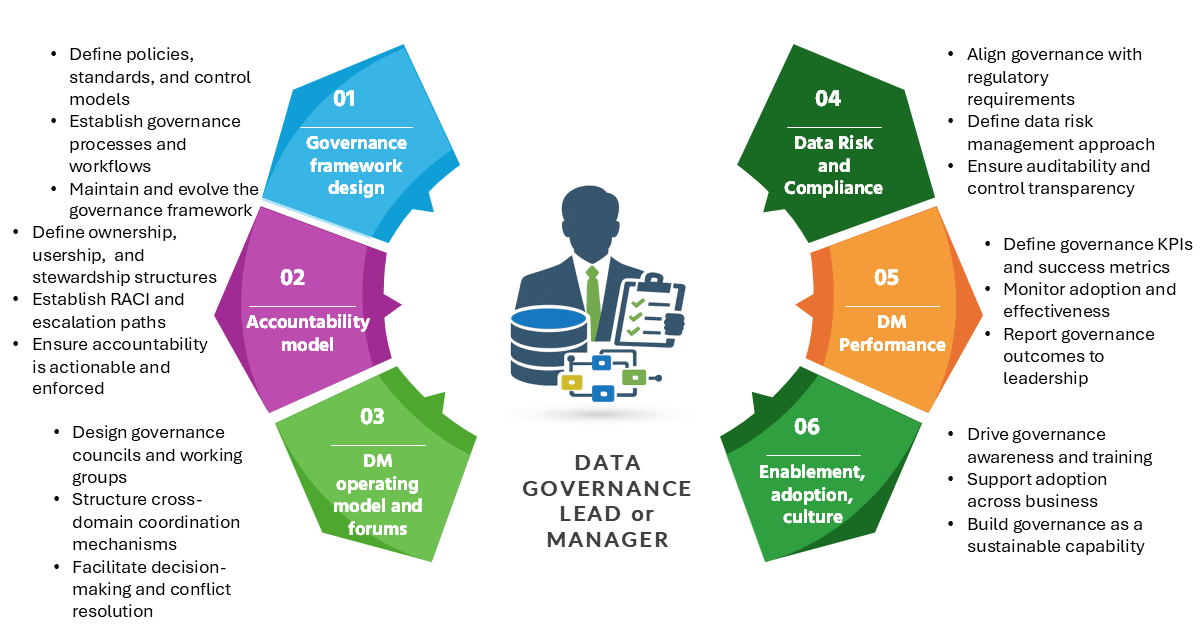
Figure 1: DG Leads and Managers: DM capabilities and tasks.
A central part of this responsibility lies in defining the governance framework. Leadership roles establish policies, standards, and processes that provide structure and consistency. Through this, governance becomes a repeatable and scalable practice rather than a collection of isolated initiatives.
Closely connected to this is the definition of decision rights and accountability. Governance professionals clarify ownership, assign responsibilities, and establish escalation paths. This ensures that decisions are made at the right level and that accountability is visible and enforceable.
Governance at this level is also reflected in the design of the operating model and coordination mechanisms. Councils, working groups, and cross-domain structures are established to support alignment, resolve conflicts, and enable consistent decision-making across the organization.
Another critical dimension is data risk and compliance governance. Leadership roles ensure that governance aligns with regulatory expectations and internal control requirements. In this way, governance becomes an integral part of risk management and organizational control.
As governance matures, attention shifts toward performance and value monitoring. Metrics are defined to track adoption, measure effectiveness, and provide transparency to senior stakeholders. Governance is no longer assessed by activity alone, but by the outcomes it enables.
Finally, governance leadership plays a key role in enablement and adoption. Training, communication, and continuous engagement help embed governance into everyday practices, allowing it to function as a sustainable organizational capability.
Over time, this layer changes how governance is experienced.
Governance is no longer perceived as documentation or coordination alone. It becomes a structured system that enables alignment, strengthens accountability, and supports organizational control.
Understanding the Accountabilities of Operational Data Governance Roles
At the operational level, data governance is evident in structured, controlled activities, as shown in Figure 2.
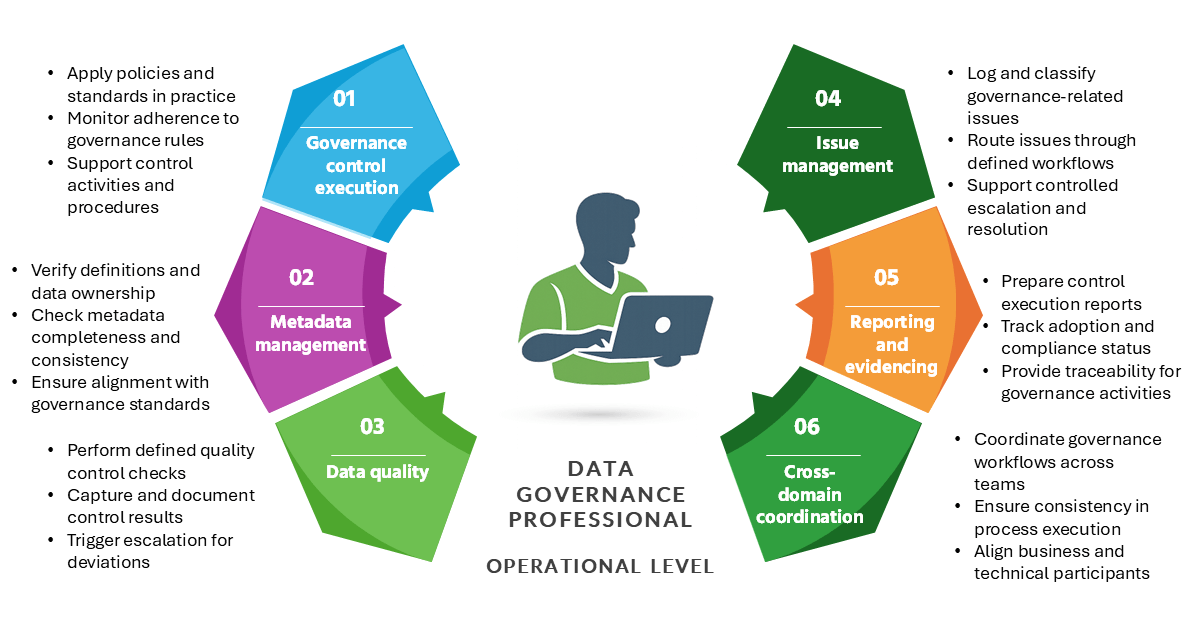
Figure 2: DG Professionals at the Operational Level: DM capabilities and tasks,
Professionals in these roles do not focus on managing data itself. Their work centers on ensuring that governance rules, controls, and processes are consistently applied across systems and domains.
This is where governance moves from definition to execution.
A significant part of this work involves executing governance controls. Policies and standards defined at higher levels are translated into repeatable procedures. Operational roles ensure that these controls are applied, monitored, and documented consistently.
Another important responsibility lies in validating governance inputs. Rather than creating metadata or definitions, these roles verify that ownership, classifications, and required attributes are complete and aligned with governance standards before data is used or shared.
Governance processes also rely on structured data quality control execution. Operational roles ensure that quality checks are performed, results are captured, and deviations are handled in accordance with defined procedures.
When issues arise, governance relies on formal issue management and escalation processes. Operational roles ensure that data-related problems are properly logged, classified, and routed through governance channels, enabling controlled resolution rather than ad hoc fixes.
Transparency is maintained through governance reporting and evidence control. These roles prepare structured outputs that reflect control execution, issue status, and adoption levels, making governance activities visible and traceable.
Finally, governance at this level depends on the coordination of processes across domains. Operational roles connect business and technical teams, ensuring that governance workflows remain consistent and that responsibilities are executed in line with defined standards.
Together, these activities create something essential.
They establish control of evidence and process reliability.
Without this layer, governance cannot be enforced, measured, or trusted as an organizational capability.
Differentiating Data Governance Roles and Stewardship
A more precise distinction begins to emerge once these roles are viewed together.
Data stewards primarily focus on the data itself. Their responsibility lies in ensuring that data is accurate, well-defined, and usable within a given domain.
Data governance professionals operate at a different level.
Their focus is not on the data directly, but on the system that governs how data is managed. This includes defining structures, assigning responsibilities, establishing controls, and ensuring that governance operates consistently across the organization.
This difference becomes clearer in practice.
Stewards work within established governance processes.
Operational governance roles ensure that these processes are executed, monitored, and documented.
Leadership governance roles define how those processes are designed, coordinated, and improved over time.
The same distinction applies to issue management.
Stewards may investigate and resolve data issues.
Operational governance roles ensure that issues are formally logged, classified, and routed through governance workflows.
Governance leaders define how issues are prioritized, escalated, and prevented at scale.
Each role contributes from a different perspective.
Together, they form a connected capability in which data is not only managed, but governed in a structured, controlled, and measurable way.
Expanding Data Governance Roles Across Key Capabilities
When governance roles are examined across organizations, another pattern begins to take shape.
Their scope is expanding beyond a single function and increasingly connects multiple data management capabilities desribed in the O.R.A.N.G.E. framework.
A strong connection exists with Metadata Management. Governance roles ensure that definitions, ownership, and classifications remain aligned across domains, creating a shared understanding of data.
This alignment extends into Data Quality Management. Governance professionals define how quality is measured, how priorities are set, and how improvement is coordinated across the organization.
A similar relationship can be observed with Data Architecture. Governance expectations are increasingly reflected in how data is structured, how flows are documented, and how traceability is ensured for critical data assets.
Another important dimension is Regulatory and Compliance alignment. Governance roles connect policies, controls, and documentation with regulatory expectations, enabling auditability and risk transparency.
More recently, governance has expanded into Data Analytics and AI. Governance professionals help ensure that analytical and AI-driven processes rely on trusted datasets, clear lineage, and consistent standards.
This expansion reflects a broader shift.
Governance is no longer experienced as a control mechanism applied after the fact. It becomes a foundational capability that aligns data management practices, supports decision-making, and enables organizations to operate with greater confidence in their data.
Navigating Career Paths in Governance Roles
The structure of governance roles also reveals a clear professional path.
Many professionals begin at the operational level.
They develop hands-on experience with data quality, metadata, and governance processes.
Over time, responsibilities expand.
Coordination across domains increases.
Stakeholder engagement becomes more visible.
Contributions to governance design begin to take shape.
This transition leads naturally toward leadership roles.
At that stage, the focus shifts toward strategy, operating models, and organizational alignment.
Frameworks such as those from the UK Government illustrate this progression clearly, linking governance roles to senior leadership positions and ultimately to the Chief Data Officer role.
This progression suggests something important.
Data governance is not a single role.
It is a professional journey that evolves from execution to influence.
Summarizing Data Governance Roles, Trends and Evolution
Several conclusions begin to take shape.
Data governance roles are becoming more structured: Organizations increasingly distinguish between execution and system-level responsibilities, even when titles remain inconsistent.
Governance is evolving into an organizational capability: Roles now focus on adoption, performance, and measurable outcomes, not only on policy definition.
The distinction between governance and stewardship is becoming clearer: Stewardship ensures that data is managed properly, while governance ensures that this management happens consistently and at scale.
The scope of governance continues to expand: Metadata, quality, analytics, AI, and compliance are becoming integrated within governance responsibilities.
Career paths are becoming more visible: Professionals can progress from operational roles toward leadership positions that shape governance across the organization.